Category: Uncategorised

  • Animation for the Stage 

    Pre-production and the Science of Planning : in conversation with Jose Ernesto Becerril Jimenez – Senior Visualisation Technician / Technical, Production and Costume at The Royal Opera House Covent Garden. 

    Industry Insights Unit 2 

    The Complementary Power of Preproduction  
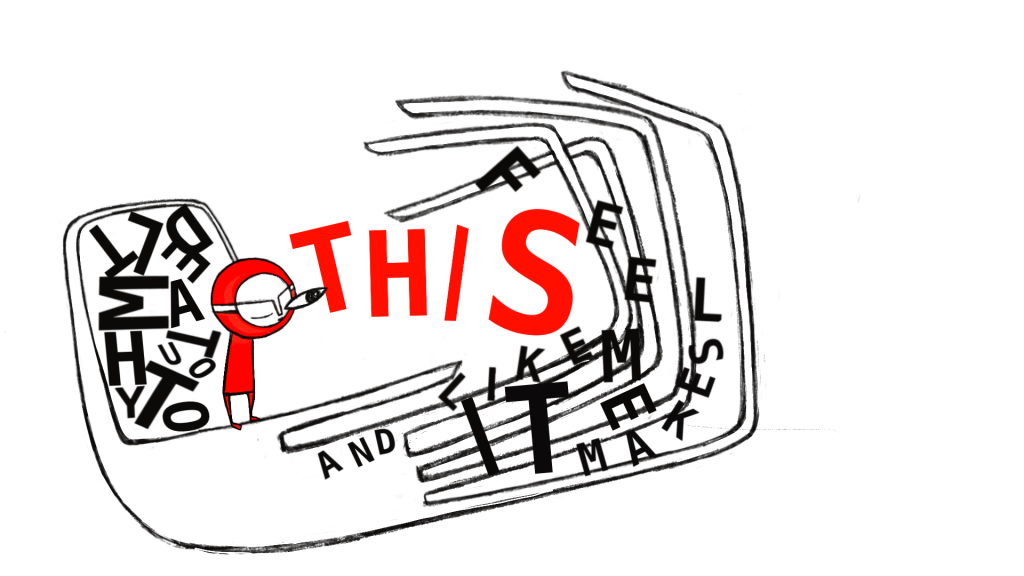
    Imogen Harvey-Lewis, LIKE THIS, Visualisation shot 2026

    I have a great excitement about animation and live action. 

    I love the unexpected thrill of seeing pictures come to life – which is why I am learning to animate.  

    In this Blog I explore the duality of pre-production, drawing a parallel with complementary elements of production for stage and animation. 

    My animation journey started with a ticket to a fantastic production Please Right Back by the innovative theatre company 1927 at the Edinburgh Fringe in 2024, whose trademark is the ingeniously combined animated gusto of Paul Barritt and the slick company direction of Suzanne Andre. Their supremely inventive and playful extravaganza of interactivity and moving graphics ignited in me a deep appreciation of the perfectly observed details of live action and the animated set, and on a deeper level the appeal of polaric experience within art forms. 
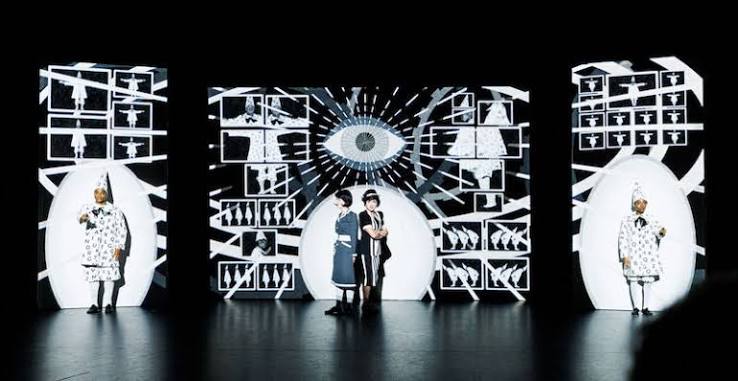
    1927, Please Write Back, 2024

    “The best installations balance technical innovation with emotional resonance” see notes 

    A nuanced balance of disparate techniques has always excited me and informs my translation of life into illustration and animation. 

    The powerplay in complementary art forms – be it live action and animation, or papercut and digital creativity – has the capacity to offer up a delicious pivotal attraction of opposites and appeals to me on many levels reflecting the counterintuitive subtleties of life. Using animation, as a labour intensive (and therefore precious) process of communication, to explore big subjects such as love, loss and appreciation. 

    I observed in Please Write Back that on stage, actors like characters in an animation, observed a labyrinth of blocking points to stand, sit and perform corresponding perfectly with the animated/live scene. Like any physical theatre, precisely where you are on stage is paramount. Lighting, sound, staging and other actors depend on you being exactly in the right place.  Unsurprisingly in this day and age, there would seem to be a growing appetite for tech on stage and in my view an animated hybrid often works the best. For a modern audience, animation still retains a connection to childhood and by association an affiliation to the hand crafted, the human touch. Put into a stage setting with live performance each complements and augments the other. A great example is the emotive production ‘I Puritani’ at the Royal Ballet and Opera (RBO). Used sparingly, the animated sequence as a character reads a letter, words spill out across the stage backdrop: it is not an add on, it’s organic.
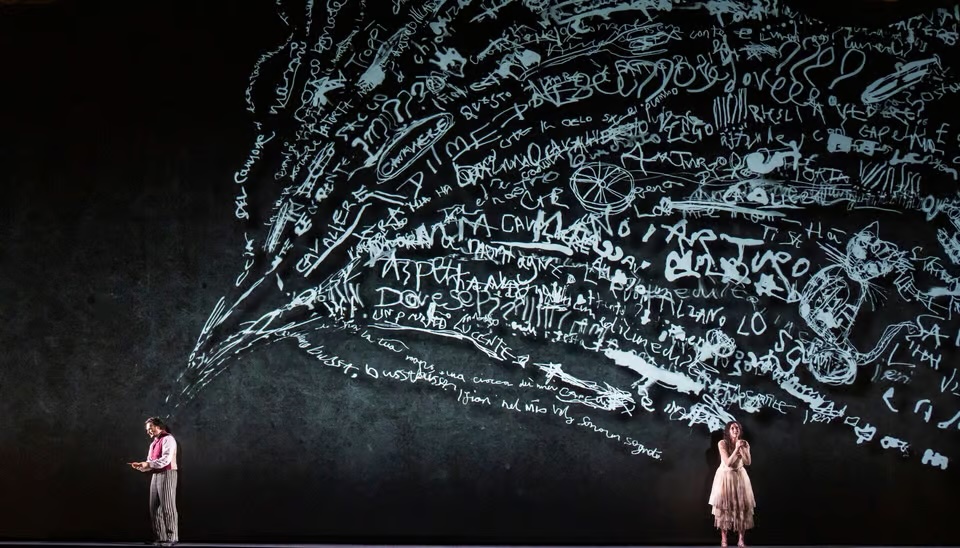
    I Puritani RBO 2026 Vincenzo Bellini

    “The best installations balance technical innovation with emotional resonance”

    Jocelyn Lecamus 28/01/2020 UTSBO

    Reaching out to the industry, it was the Royal Ballet’s production of Alice in Wonderland on which I had previously worked as an educational illustrator in 2018 which led me to a conversation with Jose Ernesto Becerril Jimenez – Senior Visualisation Technician / Technical, Production and Costume and a visit to The Royal Opera House Covent Garden. 
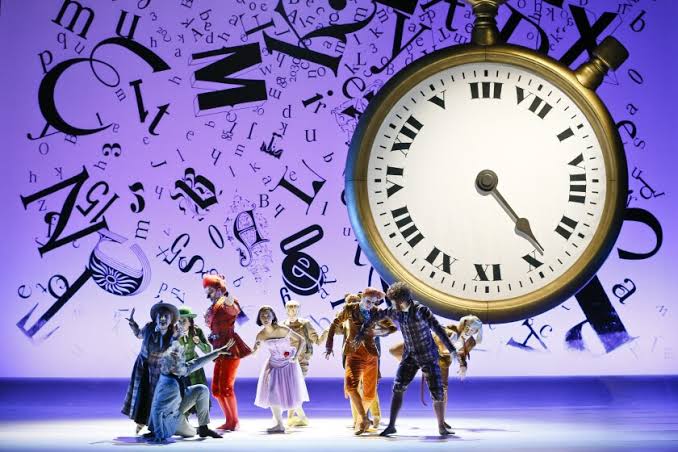
    The Caucus Race, Alice in Wonderland, ROH 2018

    Ernesto knows precision.

    Trained in architecture and then an MA in animation, it was 3D visualisation which captured him from early on. The versatility of 3D mapping and visualisation within a dynamic working stage quickly became a skill in which he saw innovation opening out before him. He describes technology developing at such a pace, enabling him to restructure the pre-production strategies of big operatic and ballet performances. 

    Visiting the Visualisation studio at ROH Covent Garden, I was fired with a million questions about design aspects, but it was the nuts-and-bolts animation infrastructure that Ernesto heads up at RBO that was seismically impressive. The essential groundwork on which all the staging, animation, 3D, puppets, live action, lighting, screens, sightlines, moving props etc hinges. 

    Ernesto and his team use animation to carefully plot the minutiae of all action and direction that takes place within a production. Mirroring the painstaking process of creating animated film – frame by careful frame – the underbelly foundation of pre-production animation in theatre is fascinating. 
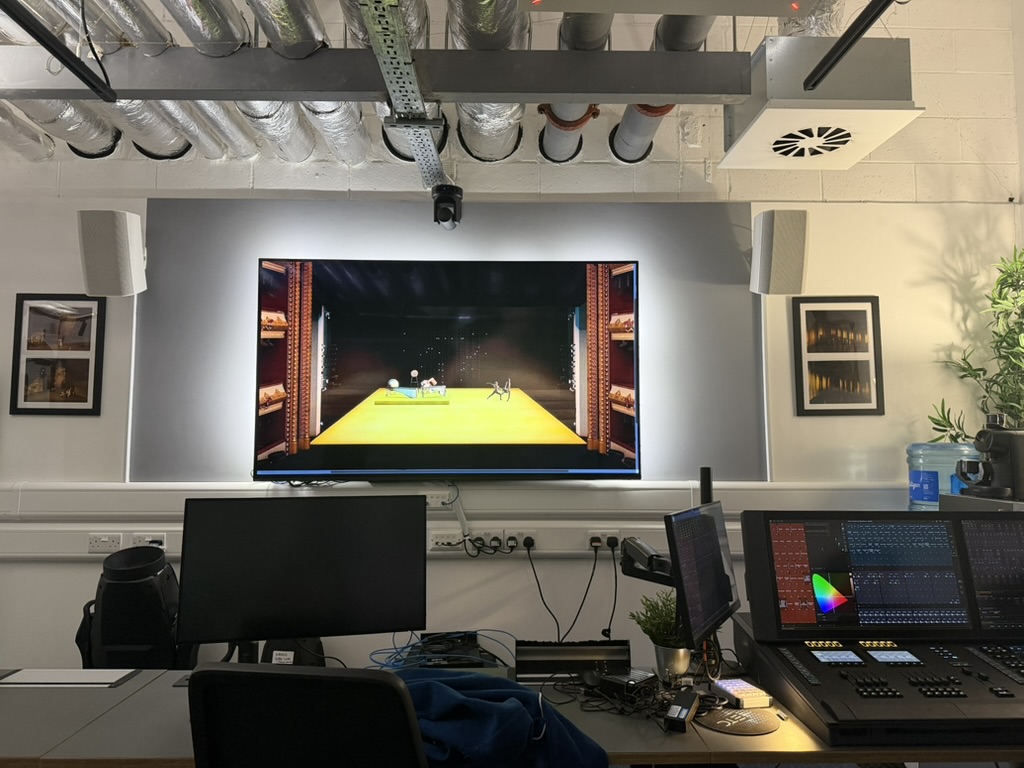
    RBO Visualisation studio, 2026

    “Pre-production can brew for up to 5 years, access to the physical stage for all cast, staging, lighting etc is just two weeks! Two weeks to get everything sorted in exactly the right place at the right time before curtain up” Becerril Jimenez, 2026 

    The 3D Visualisation team through a process of texturing can define physical appearance, the affected of light, how it moves etc. With this technique all elements within a performance can be modelled and animated to preordained technical specifications right down to the last detail, for example, the particle simulation of snow in The Nutcracker – how snow falls, how to light it, scalloping etc.  
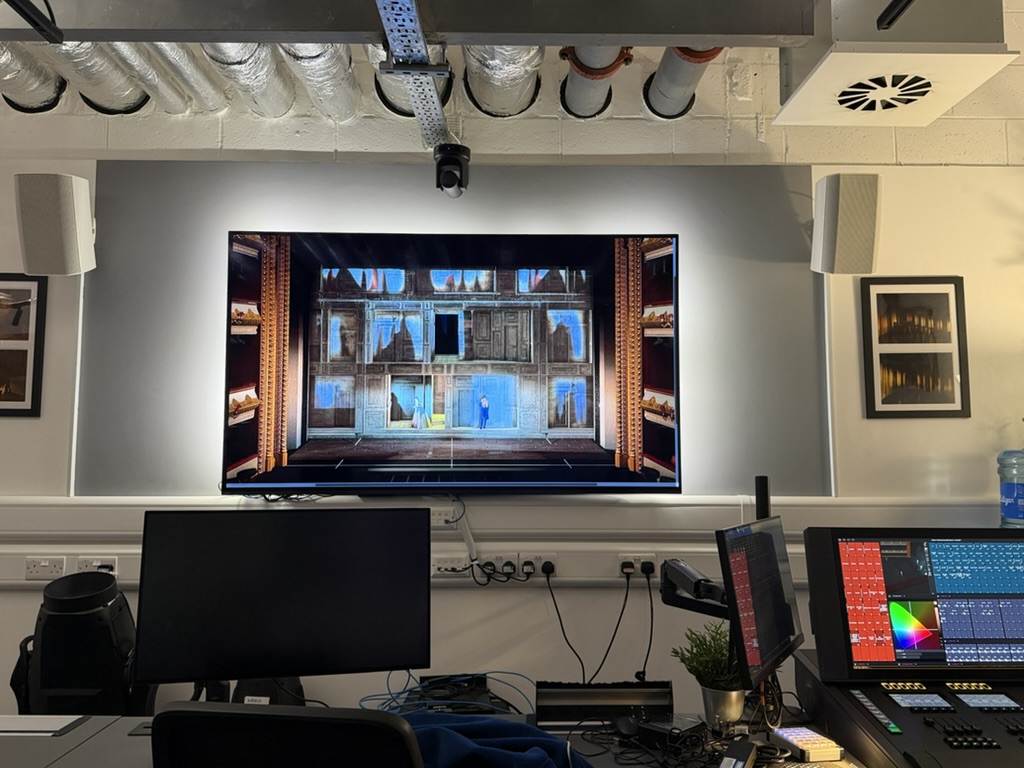
    RBO Visualisation Studio, 3D visualisation of Don Giovanni production 2026

    Once the stage is working, 3D texturing enables costumes, choreography and director’s notes to simulate the auditorium, sightlines, lighting projections and screens and how the set will respond to the live production.  

    I began to appreciate how much animation can be used as a sophisticated tool for communication. Able to lock in multi-variables within the production program, to create a fully comprehensive working model which is highly disciplined, completely editable and adaptable – impossible in a physical model.  

    Like life, it involves lots of problem solving. 

    My reflections and learning are technical, practical and profound.  

    It is easy to imagine yourself in a groove of personal preferences in any creative specialism. I must admit my leaning in animation has to this point been the opposite of 3D modelling. However, a tremendous amount can be learnt and transferred from developing a wholistic understanding and appreciation of all aspects of animation. 
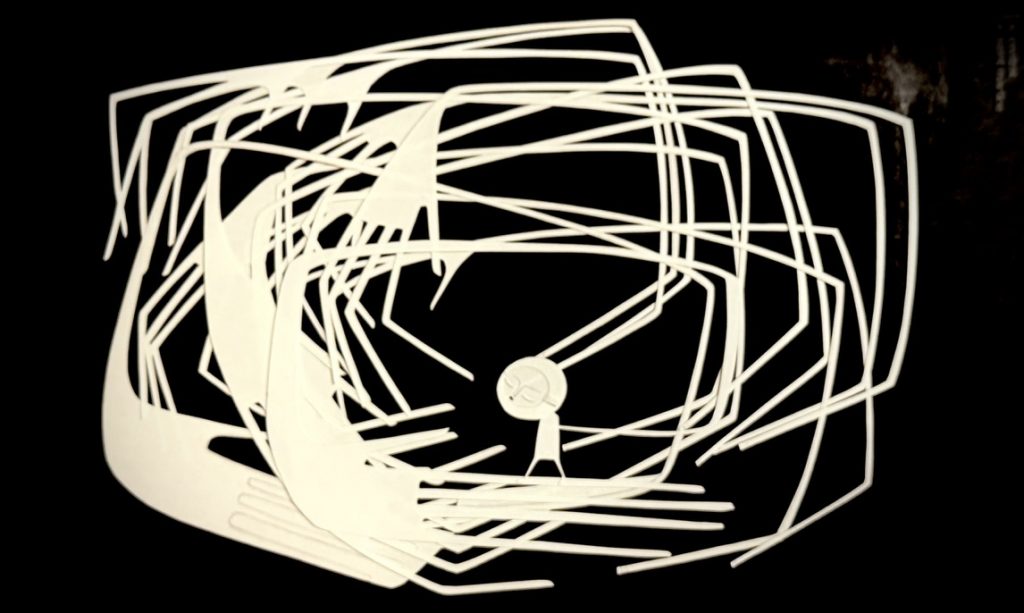
    Harvey-Lewis, LIKE THIS animation still, 2026

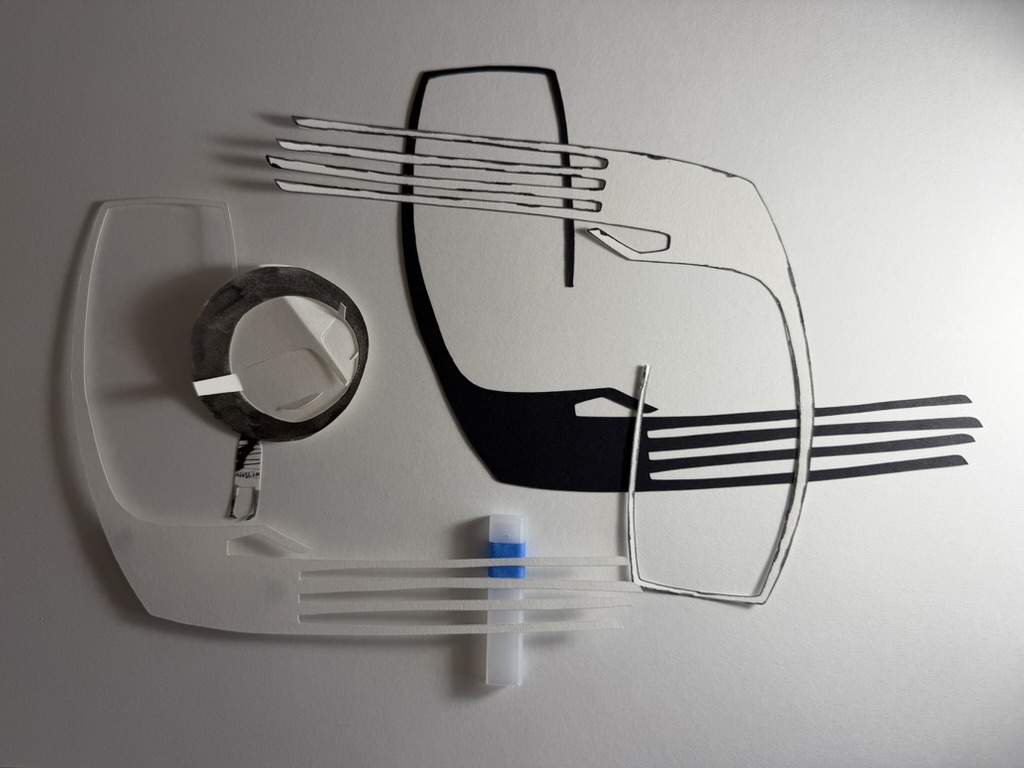
    My learning in papercut stop motion embraces low tech with tech in equal proportions. I find this fascinating, conceptually and in practice, and makes for a compelling outcome. Similarly, the Visualisation team at RBO compounds a myriad of creative decision making. The 3D modelling of every detail, from lighting to sightlines, enables creative freedom. It forms a footprint for each performance, the mastermind of preproduction. As Ernesto commented 

    “It is a lot of hard work, but ultimately less stressful coming up to a performance as every detail has been considered, mapped and locked in” Becerril Jimenez, 2026 

    My process of replacement parts stop-motion plays on this balance of preproduction with aesthetic immediacy. With assets cut, I can explore character performance unencumbered by structural decision making.  

    The 3D preproduction visualisation team at RBO are all creatives and love the creative environment in which they work. But creativity is more than outward aesthetics. It includes creative thinking and that’s problem solving, resourcefulness and ingenuity. The RBO Visualisation Team apply their creative technical understanding, laying the foundation stones for all the production visuals to rest. 

    They, like Ernesto, are architects. Something to which I aspire. 

    References

    see blue note book for articles
  • What does it say on your hat?

    A conversation with Pre Vis artist Clive Hutchings

    October 2026

    Unit 2 Industry Research

    Clive Hutchings is a very modest guy. 

    We met to chat about his work as a Pre-Visualisation Animation Artist over 40 years, how his role changed and adapted to embrace new technology within the industry, and really to geek out on drawing and animation and film. We chatted for hours, but it was only on a following WhatsApp that the extent of his animation career revealed a catalogue of studio highlights including: Disney; Amblimation; Dreamworks; Ragdoll; RocketPictures; Paramount and Aardmann to name but a few. 

    His work is fascinating and despite the huge disparity in our animation experience, our common ground is simple: our generation and our love of drawing. Albeit a joint delight in the use of drawing as an effective communicator, a healthy interest in problem solving and a strong foundation in craftsmanship and making. 

    Aardman Animations, Hutchings, C. Pre Vis art, 2021

    Throughout our conversation I was mindful of my own learning and practice. 

    The role of a 2D layout artist, I learned from Clive is “less about drawing (and) more about visualisation”. Combining all elements of describing a shot: storyboard; composition; camera moves; background roughs and a running interpretation of how a shot will work. It is both thinking and experimental-heavy, combining film making and creative arts through a process of rendering. Allowing the Director to review each aspect of the animation before final approval. 

    Thinking about my own practice of stop-motion, there are no layout artists to simulate camera moves, as action is shot in real-time with real cameras. As stop-motion animator you must be the complete package DOP, establishing an appropriate camera language for the film. As I had previously read in an article on the Importance of Visual Storytelling, “It is critical to understand the story and emotion of the sequence before placing cameras into the scene. Without this, a camera is only a spectator in the scene, not a storyteller” Kim,A. 

    Talking to Clive, we agree that there is no replacement to learning the foundations of your craft. He describes the use of ‘old school‘ rostrum cameras with which you had to ‘really understand perspective’. Moving artwork to create the appearance of multifaceted action; 360degree detailed character drawings and truly understanding movement to conceptualise the world within the animation.  

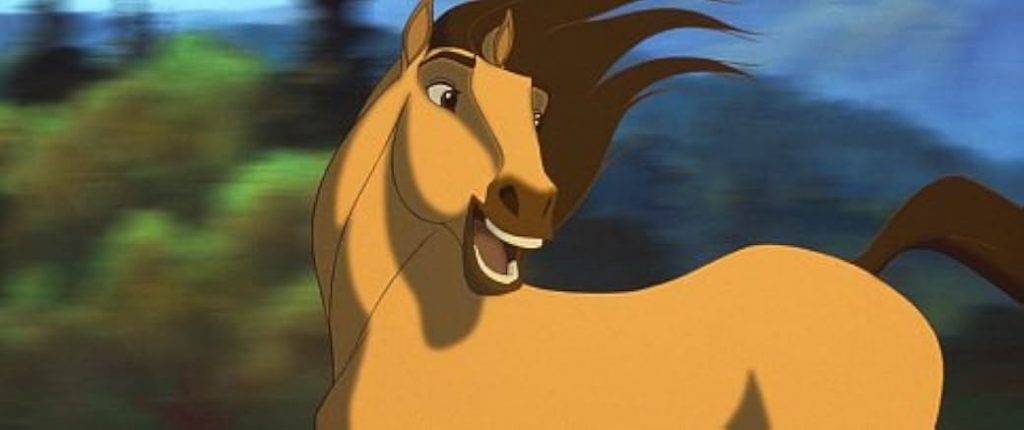
    The Spirit of Cimarron, DreamWorks, 2012

    By the mid 1990s, he explained, hand drawn animation began to use 3D tools to ‘map out’ and make comprehensive sense of a 2D panorama, and “people embraced it” – heralding a positive change in the system pipeline. ‘For example?’ I ask. Clive cites a sequence of CG horses he worked on in The Spirit of Cimarron (Dreamworks) in 2002: “Early CG was a tool. A means to facilitate a clearer, slicker 2D process.” The huge timesaving and broad elaboration of using projected surface imagery and the precursor of texturing, the object nevertheless was to create a believable hand drawn effect as, counterintuitively, “there was not the current appetite for animations to appear digital.”  

    The nuanced balancing of technical progress with innate human creativity is fascinating. Clive’s’ decades of experience within the industry has seen a catalogue of change.  

    Back to his comment on “less drawing”, and mindful of an emphasis on the breadth of technological development, I play devil’s advocate –  

    “Are any of them (Pre Vis) creative artists?” 

    “Erm…”, Clive hesitates, “ Yes,… but with a head for the techy stuff”.  

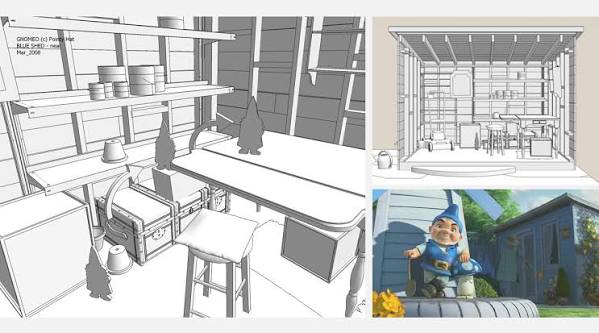
    Gnomeo and Juliet, Neal Petty Portfolio, 2011

    Time saving, I reflect, does not equal progress. Technology which advances possibilities and mops up the manual equations of process such as the workings out of complex perspective, is only as good as the proportion of creativity it enables to flourish. 

    Taking my learning from Clive and zooming it into the microcosm of my solo stop motion experience: the big commercial studio to the animation student, I reflect on an appetite of problem solving, ideas and fun. This we have in common.  

    There are always shortcuts, aided by software technology. There is always clean-up and rescue packages to be applied postproduction. But none of these can replace genuine ingenuity and exploration in technique. As soon as we sit back and rely on technology to ‘do the work for us’, we relinquish originality and new (however conversely ‘old school’) visual frontiers. Contemporaneity is both reflective and subjective within the context of new creative endeavour. The ‘newness’ comes from heartfelt, pure intention of communicative aesthetic.  

    Everything happens within a context – this cannot be controlled.  

    Animatic Concept Art, Harvey-Lewis, I. 2026

    Currently I am working on my own strategy. Considering my MACA learning curve, I can focus – unencumbered by the pressure of a client – on my personal design aesthetic and how best to achieve this. 

    The canny and inquisitive use of software supports this process, but it cannot replace originality and a passion to express as an artist. Clive laments that he doesn’t do enough drawing in his career. Something he loves. The Adobe suite, for example, is a means to refine, homogenise and clean up, but too strong a lean into this, for me at least is an anathema to ideas. 

    LIKE THIS, test shot, Harvey-Lewis, I. 2026

    As we wrapped up, our conversation took a short concluding step into the topic of AI, almost in the “What the Hell”, ‘arms-in-the-air’ kinda way (we are both in our 50s and have hard earnt our understanding and learning of all CG tech as a new adult language). Things come in waves, as with current AI push back, a respect and preservation of traditional techniques and aesthetics is a precious thing. 

    “AI can do most jobs now” reflects Clive, “but it cannot replace learning or working as part of a team”.

    ….Whereas I might have taken the conversation down the path of homogenisation – where everything AI becomes margarine….

    Clive’s take was more on the loss of creative camaraderie and reactive nuance. Within his studio career changing direction was traditionally a huge collective undertaking, however, as he says, “working in isolation with AI you just don’t learn from each other”. For Clive, colleagues are sounding boards and enable the ignition of creative negotiation in their collective expertise – “able to get the best from the best”. 

    I ask Clive, ‘What does it say on your hat?’  

    “Team Creative” he says, and I’m with him on this. 

    Imogen Harvey-Lewis 2026

    References

    The Importance of Visual Storytelling, Arem Kim. 3dTotal interview. Skreenskills.com, Sept 12 2018

  • Pre-thoughts on the 12 Principles of Animation

    Slow steps at the bottom of the mountain

    Learning to be an animator is a slow and methodical process. My years as a freelance illustrator has put me in good stead with pen and paper, however the fundaments of transitional movement, made up of a multitude of drawings, is a completely new venture.

    My current drawing practice is centred around character and emotion. Single pose characters, holding their own, communicating through body language and attitude. They are simple and tend to come in batches of about 8 – 12 individual drawings. They are invariably usurped by the next idea and subsequent character to emerge. Within these sets of images, characterisation and variation occurs of its own accord. I usually feel I am just racing to keep up and allow the drawings to make their own way onto the page.

    This ability to make pleasing images of single pose figures is a great start. I have developed a clear aesthetic voice over the years, and I like this. But shifting ‘single-use’ characters into characterisation, requires a whole new knowledge bank. I have never until now, had to consider the ‘links’, the ‘in-betweens’, the ‘what-next’s’, and in order to work these out I need a framework and process.

    This ( I understand ) is called the 12 Principles of Animation. A checklist of technical knowhow from which to construct a convincing moving image. These steps are ones I am already taking in my first few weeks on MACA (MA Character Animation) at UAL.

    All art is creative, and should be free to break the rules. Some animation styles are abstract, some authentically misaligned and some super realistic.

    But the thing about animation is that it is fake.

    It asks of its audience to completely suspend belief and go with the caprice that what they are watching is the equivalent of real life. To achieve this the 12 Principles form the backbone – the skeleton – of a make-believe world of action and reaction.

    At the start of MACA I feel myself to be at the bottom of a mountain. Putting my drawing skills to one side, I must learn to draw and ‘rethink drawing’ from a whole new perspective. There is very little auto pilot in animation beyond the initial concept art. The rest is comprehension and graft.

    It is both daunting and exciting.

    I know I am going to learn so much and I know this learning is going to help me create new and wonderful things. The process is methodology, and that is where the 12 Principles come in.

    Most definitely to be continued.

  • Why I Draw like I do

    Character design start ups

    In our first Character Design session with tutor Sacha Beeley (15th Oct 2025), we were invited to consider ‘Why we draw like we do‘ What makes us tick when pen hit the paper and what our innate driving forces are when creating a 2D character.

    However complex (or not) a character ultimately becomes, there is always that spark, that push and motivation, which manifolds a genus of our own. A process of talking our truth, drawing from the heart and being honest.

    Originality is a mutable concept that expands and contacts according to one’s experience, conscious-memory, auto-memory and subliminal-memory. But wherever the ideas are coming from, in that instance of thought and creation – it’s the intention that counts.

    Put on the spot – I have a strong desire to portray feelings and emotions. Simply, quietly and directly.

    I would consider myself to be fairly shy and this I feel comes out in my drawings. I rarely see my characters as taking centre stage.

    I like the in-betweens, the side glance or implied action.

    I am drawn to quiet things, like birds, animals and pencils. Enjoying the simple – like solo playing with marbles.

    I like to express feelings and thoughts I might have in a drawing, but am less likely to say out loud: a sort of alter-ego and a companion.

    Quick draw Cat Boy Character 1 min each

    2 corners of influence

    Richard Hamilton SLIP IT TO ME. 1991. LAPEL BADGE.

    When I was a teenager in the 1980s I went to a Pop Arts exhibition at The Hayward Gallery. I don’t recall every work of art, but I do remember the feeling it left me with and one which I draw on within my art ( Why I draw Like I do ) still today. It was bold. It was ballsy. It used text within artworks to heighten the delivery pitch. It was communication and I loved it. A pin badge with the slogan ‘Slip it to me’ by Richard Hamilton, was my physical take away, however the impact of direct and implied animated communication, remains a corner stone of my creative journey. To this day, I use words in my drawings. If it helps – do it.

    Jamie Hewlett has the other corner covered.

    Rusty Sun, Jamie Hewlett, Digital, 2009

    When I saw the Gorillaz for the first time, my creative mind was completely rearranged. His shifting of goal posts, bringing live interactive animated illustration to the masses, has stayed with me and is within my daily drawing practice. Understatement, care free delivery and ‘real’ life-living, care-worn people.

    I will always be a magpie for innovative illustration. I seek it out.

    My starting point has to be honesty. How would I feel if that were me.

    I really enjoyed our session with Sasha. The drawings here are the exercises we did.

    5 mins drawing with a familiar material – 2B pencil

    4 mins Unfamiliar material
    2 mins in an uncomfortable position
    ! min with non dominant hand
    2 mins with 2 simultaneous materials
    30 secs on postage size tiny paper