Blog

  • Simulated Work Experience

    MACA 2026

    Stop-motion Cat Painter

    I am working with Director Lucia Yu on her film Cat Painter

    It is a collaborative animation project working in 3D puppet stop-motion and tells the story of a down on his luck artist, whose paintings come to life and become a haunting obsession.There are 2 characters: the Cat Painter and his muse, the Fish. 

    I am joining the work schedule in its early stages. The animatic is made; character design established; set design mapped out and puppet build semi complete. A perfect example of work in progress. 

    Lucia is organised, yet open to discussion and design suggestion.  Stop motion puppet animation is a new venture for her, which enables me to observe her process and challenges in real time, which is an opportunity to learn together. My primary role is to support in the making of props and scenery. My secondary role is to be an objective sounding board for Lucia, to be available to chat and discuss options during this initial decision heavy part of the preparatory process.

    First job was to watch the Animatic.

    animatic 1.mov

    This gave me an essential overview and understanding of Lucia’s vision for the story line, the action involved, pace and location changes.

    Pre-shooting, puppet stop-motion is very top heavy. A large proportion of the work is in the preparation and the build. Setting everything up prior to shooting the first frame. 

    Cat Painter: early set mark out. Lucia Yu, 2026.

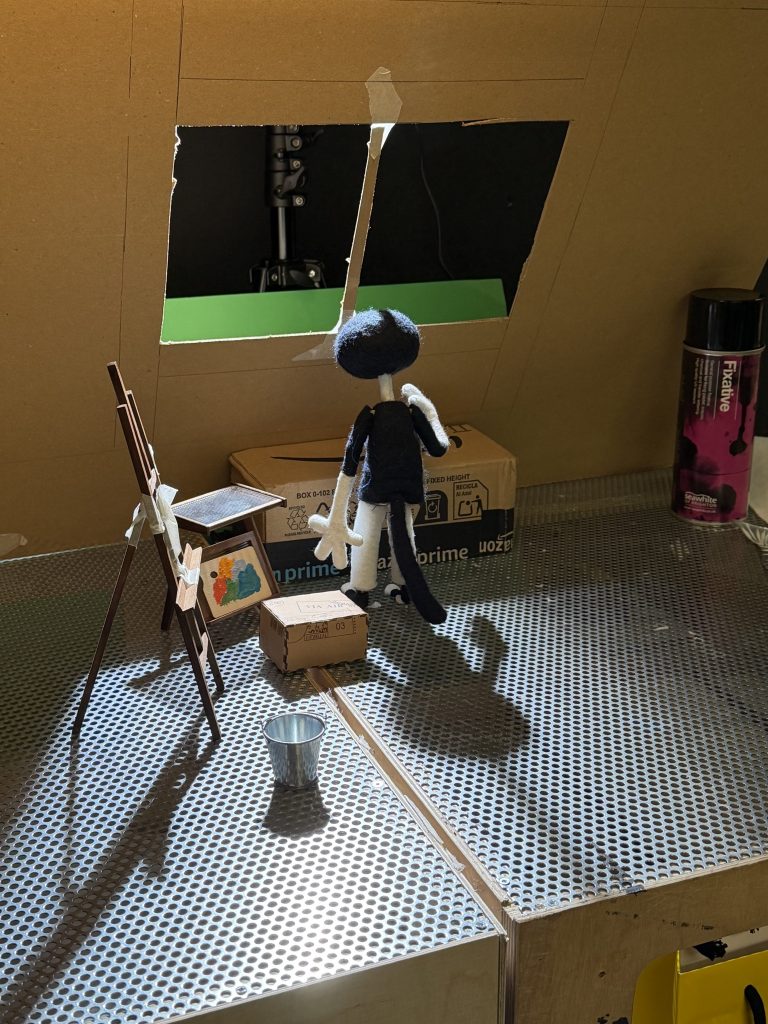
    Painter Cat is set in an artist’s studio. Lucia’s drawn rendition of the set is a detailed reference and carefully planned to accommodate her animatic. Her build concept leans towards realism, with a blend of intricately handmade wooden furniture, and sourced dolls-house miniature props. To achieve this realistic aesthetic, a great deal of meticulous hand crafting is required. This takes time and adds pressure to the schedule; however, it is a choice and one which hopefully will pay off in the appearance of the final shoot. 

    Painting the wooden floor test piece – Cat Painter. Lucia Yu and Imogen Harvey-Lewis 2026

    In contrast, the main Cat character is anamorphic, with a cartoon stylistic that allows for a wide-ranging set of movements and character traits falling somewhere between cat and human. A common suspension in animated reality. 

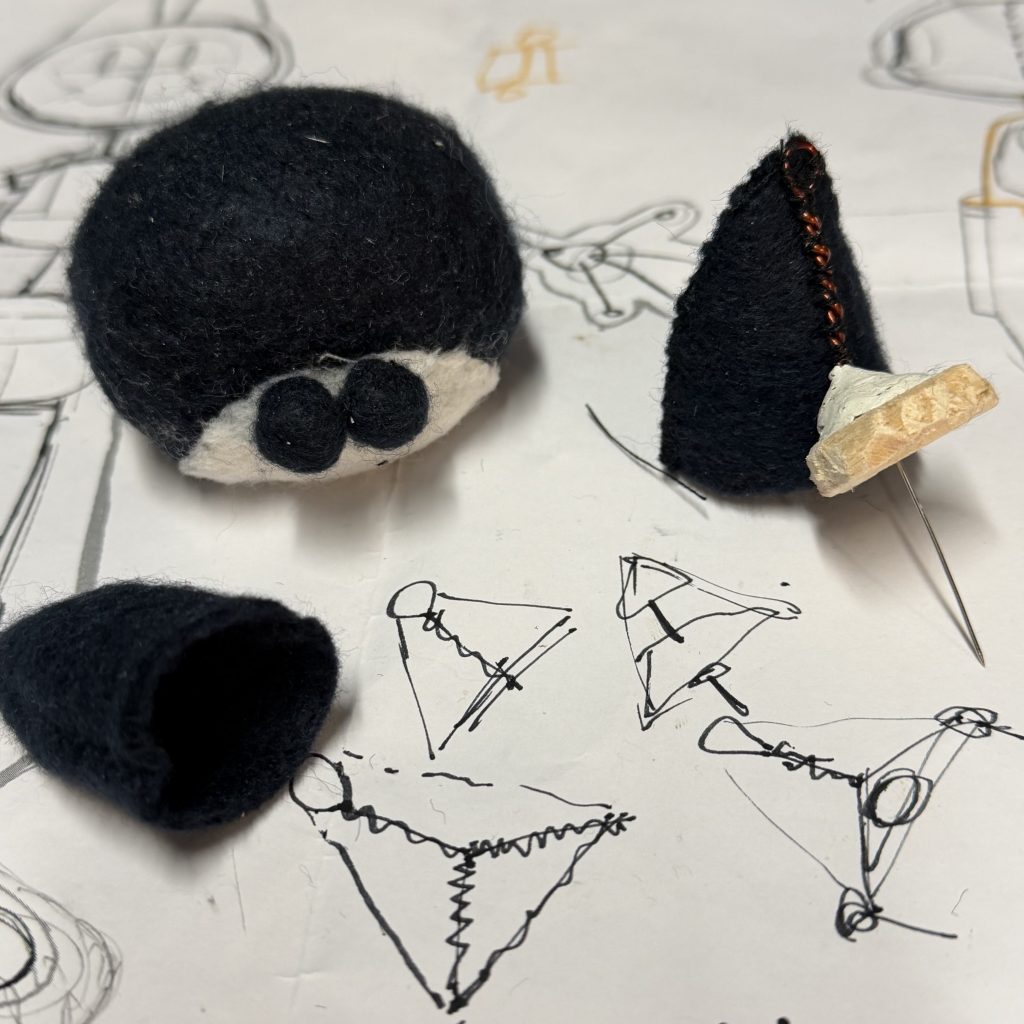
    Felt Ears for the main character – felt, wire, balsa wood. Lucia Yu and Imogen Harvey-Lewis, 2026

    Making a fully articulated 3D puppet is also a slow and precise process. Far more complex than my previous attempts, Lucia’s puppet of wood, wire and felt has interchangeable and removable arms, feet, head, ears and tail. This is to guard against breakages (a major setback to a one-piece puppet) but makes for a more fragile figure in the build, as pieces keep detaching. Hopefully worth it in the long run.  As an example, the photo above shows a detail of the workings and construction of the Ears. Everything must articulate, so the process is a 3 piece felt cut and sewn; a wooden base cut and shaped to fit the head contour; a wire spine twisted and attached to felt and wood bases; a pin pushed through the wooden base so that the ears can be attached and repositioned where necessary.

    I have been tasked with experimenting with materials for the fish and how it might be realised in animation. 

    The fish transforms from painted canvas to real life, escaping the confines of the easel and leads the cat on a hunger induced romp around the studio and into a surreal escapism. Consequently, it has quite a bit of action and needs to move well.  

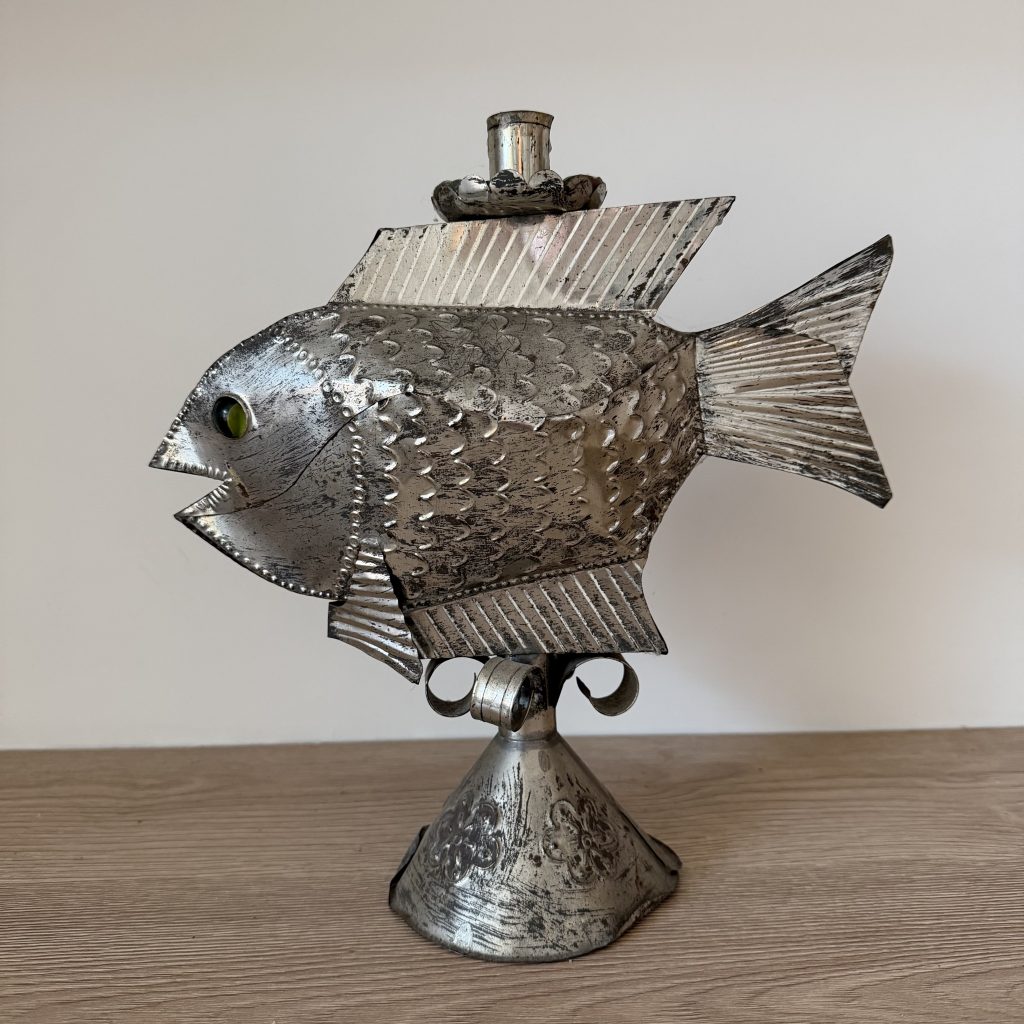
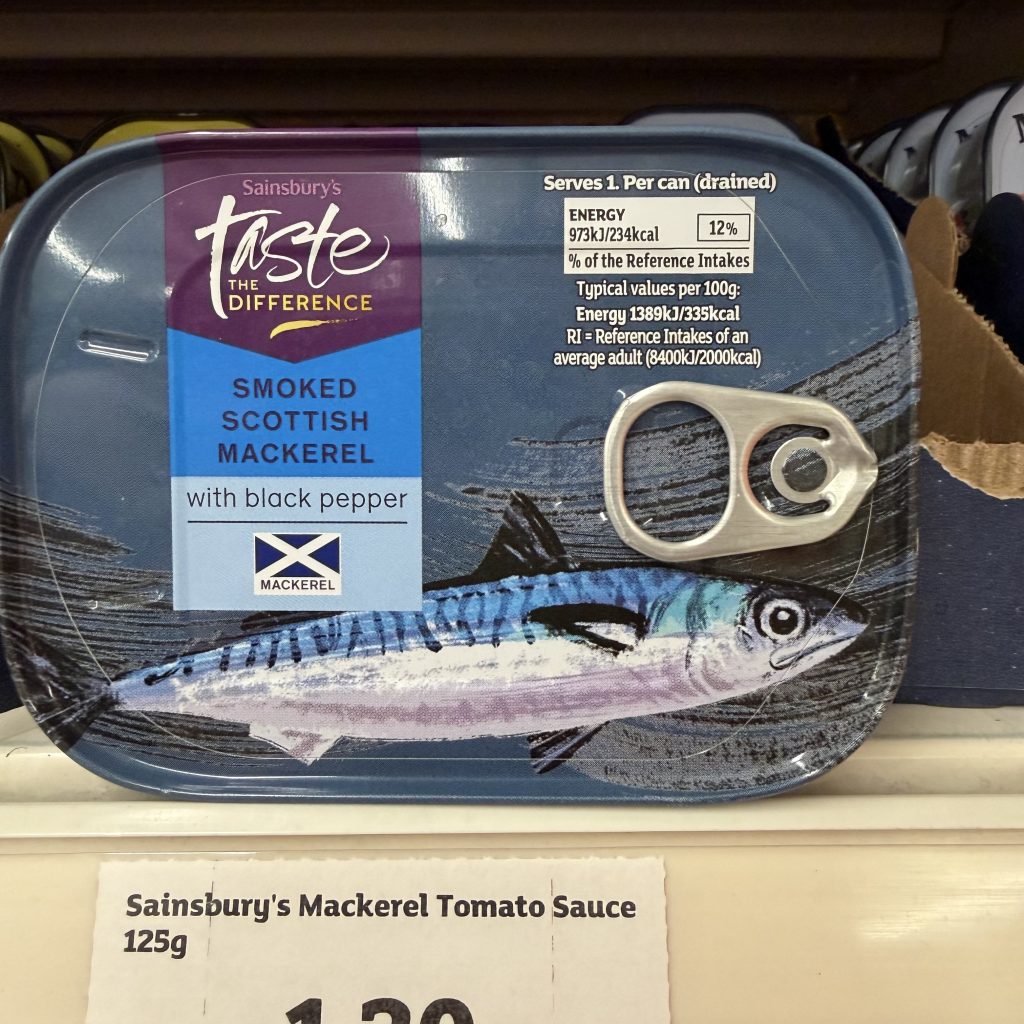
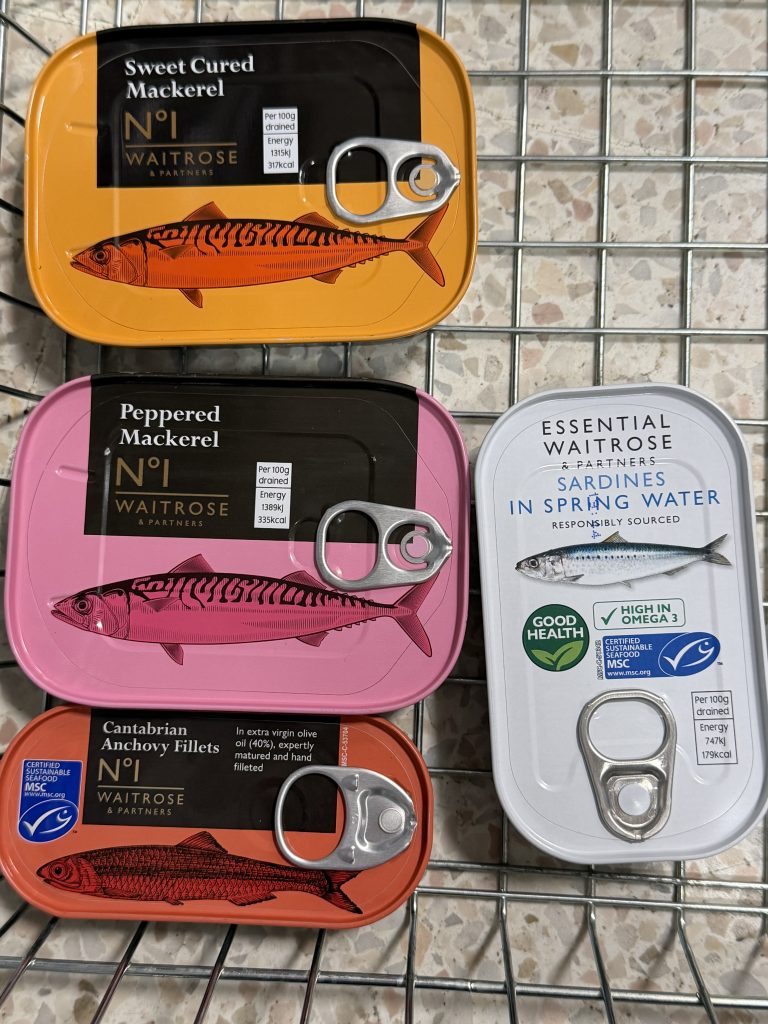
    Looking into fish inspired options and I have been drawn to the notion of cutting out fish from sheet metal. Ideally from an actual tin of fish and perhaps using abstracts from the existing packaging graphics to inform the design. This not only ticks the recycling box and is metallic and shiny like fish skin, but links nicely with the story – the hungry cat finishing his last tin of fish, the fish character as food. 

    Mexican tin fish sculpture (own collection) Ref.
    Fish tin – Sainsburys. Ref.
    Fish tin graphics – Waitrose. Ref.

    I went in search of fish graphics, patterns and textures.

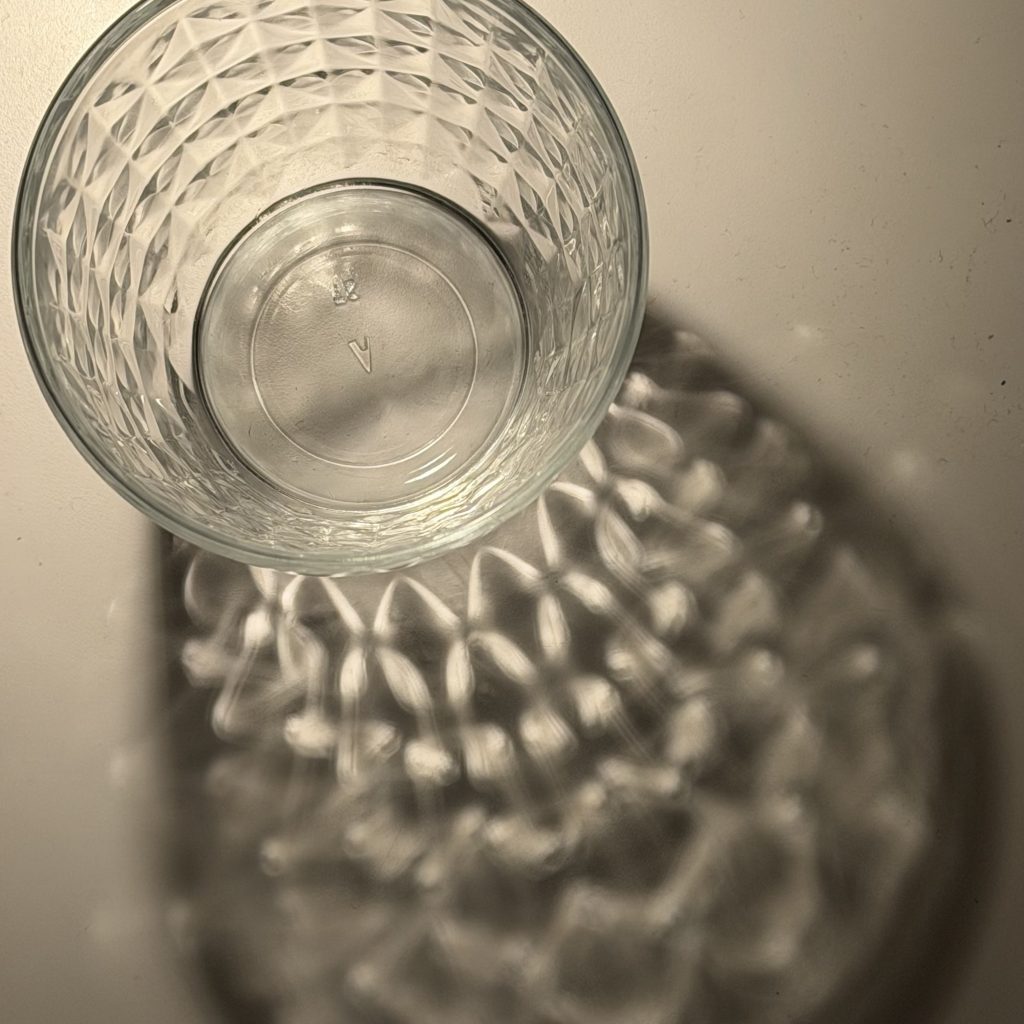
    Light and shadow pattern from a glass as reference for fish skin
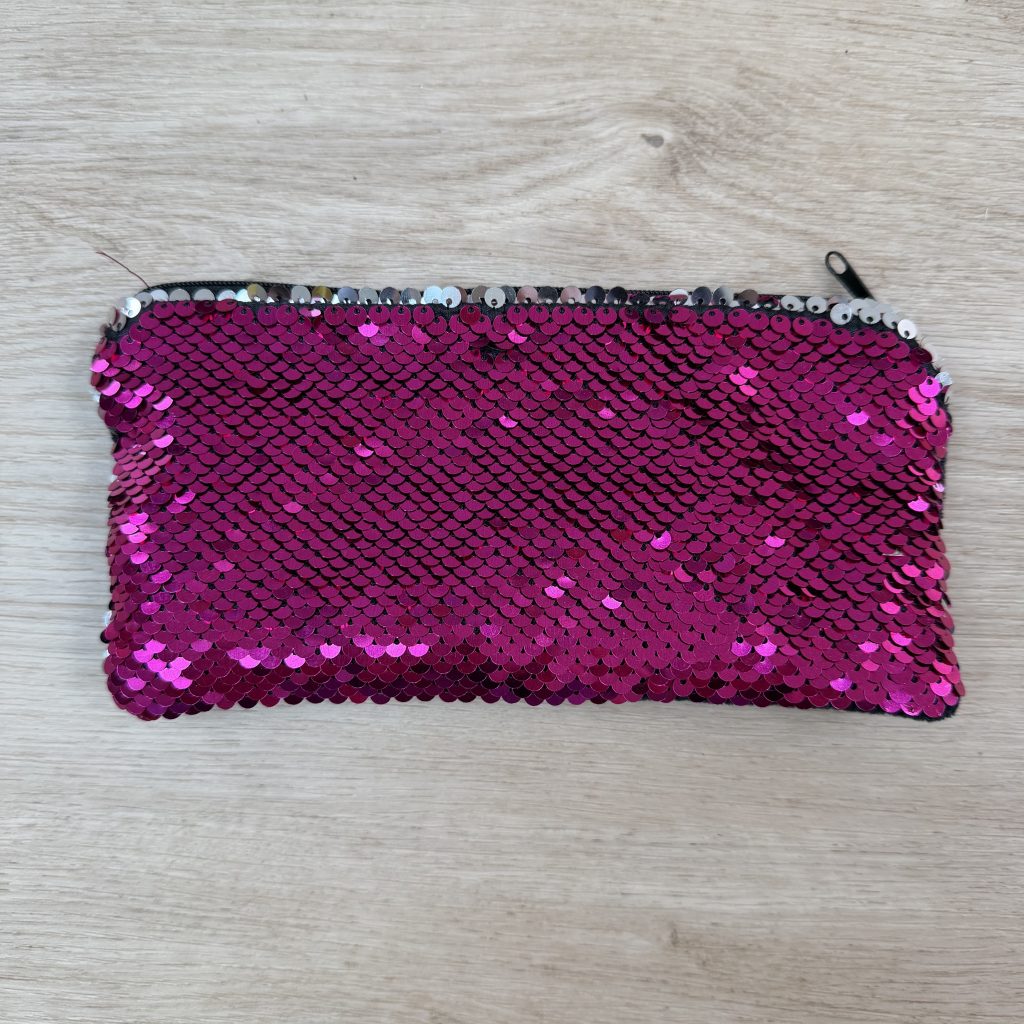
    Sequin fabric as reference for fish skin
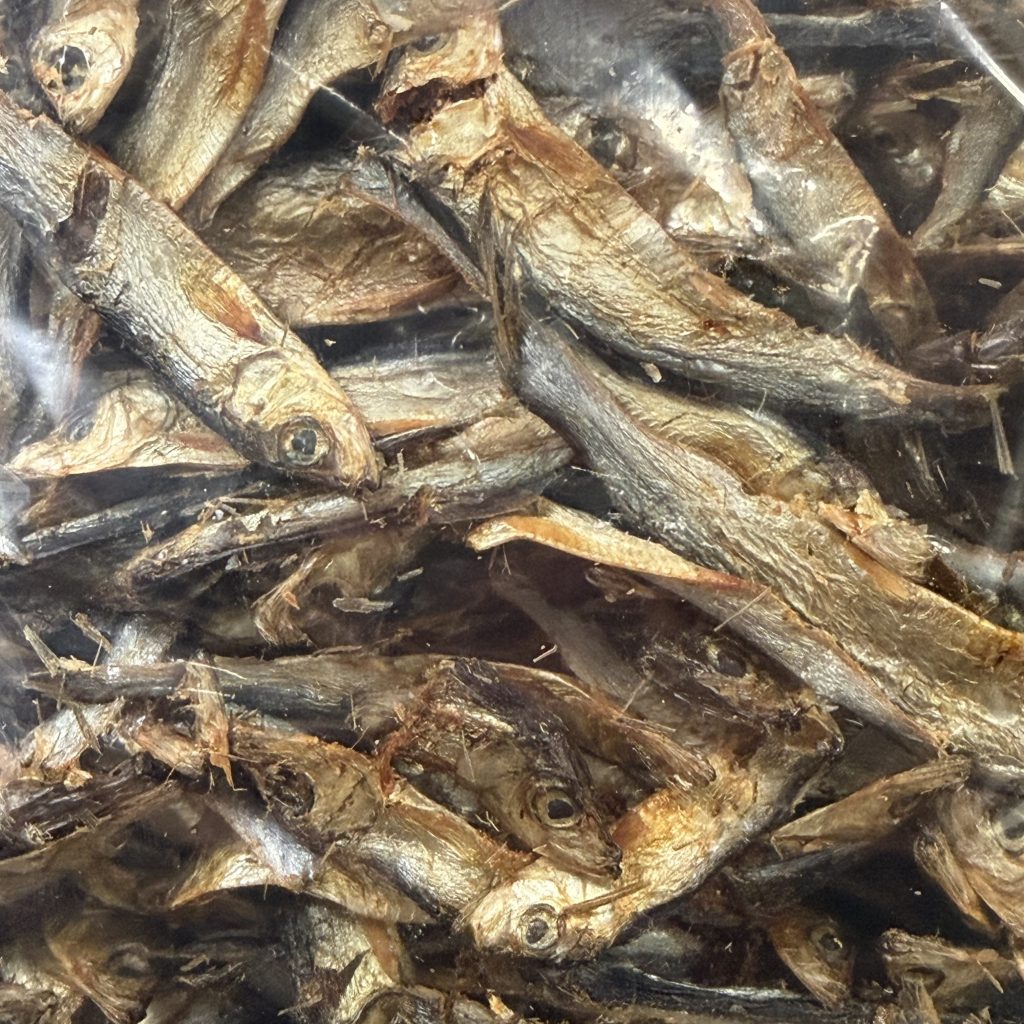
    Sprats – local pet shop, as reference for fish skin

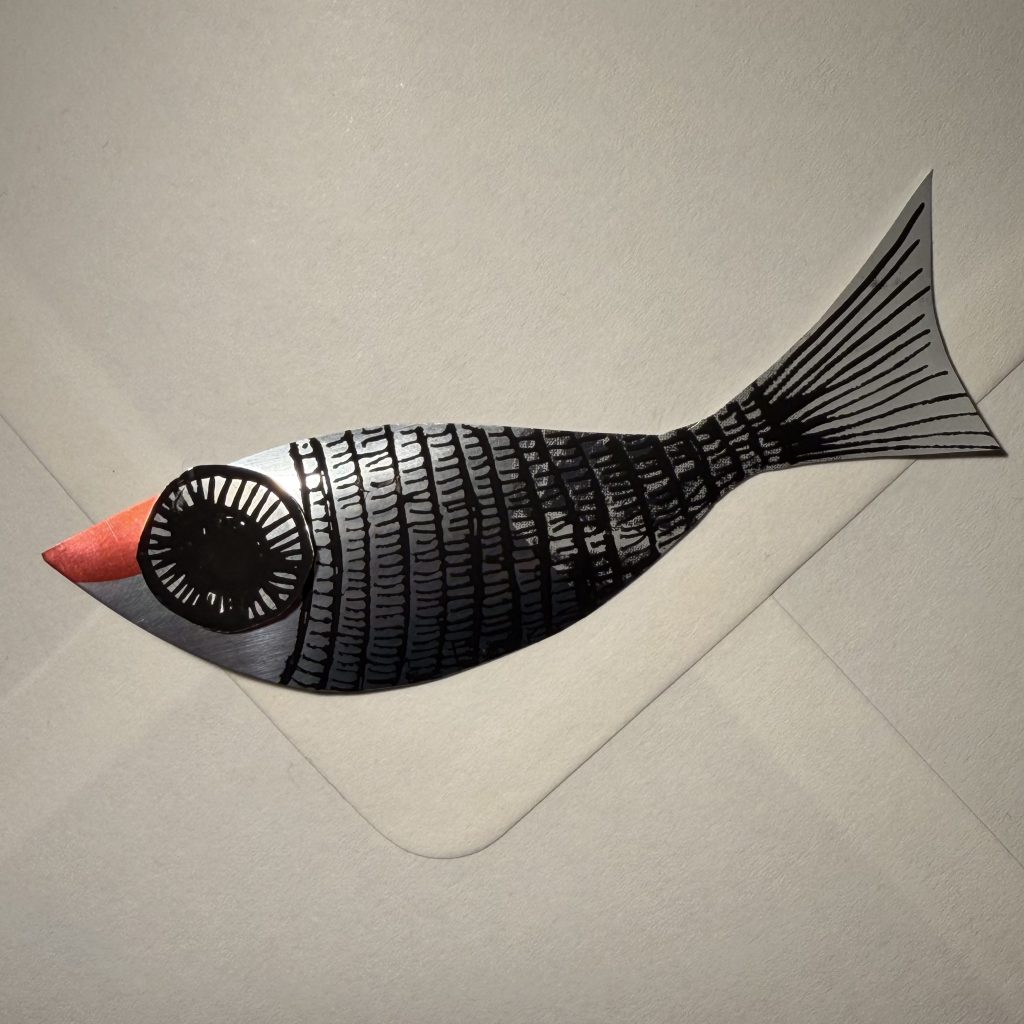
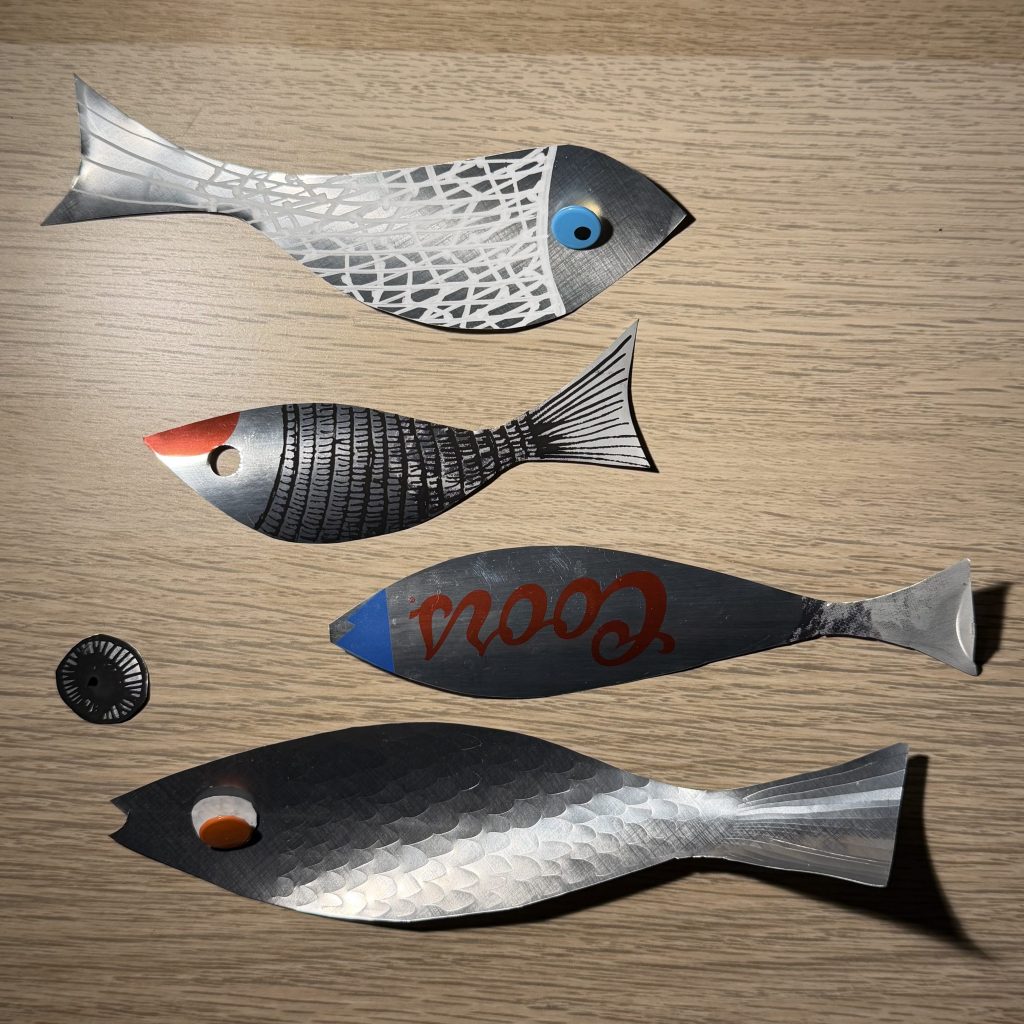
    Experimenting with cutting a set of simple outlines from a discarded beer can I found on a walk, I tried a range of decorative options including Posca pen, acrylic paint, scoring with a thick needle and piercing with a pin – looking to emulate a real fish and capture an aesthetic of hand painted by the animated ‘artist’. 

    Tin fish prototypes for Cat Painter cut from recycled beer cans. Imogen Harvey-Lewis. 2026

    I feel the tin fish have strong potential. The metal is thin and malleable. It naturally curves (having previously been a beer can) which gives it a twist and dynamism. The possibility to bend and animate is a good option. 

    We shot a short test sequence in Dragon Frame to explore the movement potential. Moving the metal fish sufficiently into 3D to both fit the aesthetic and animatic is the next challenge. 

    insert test shots here

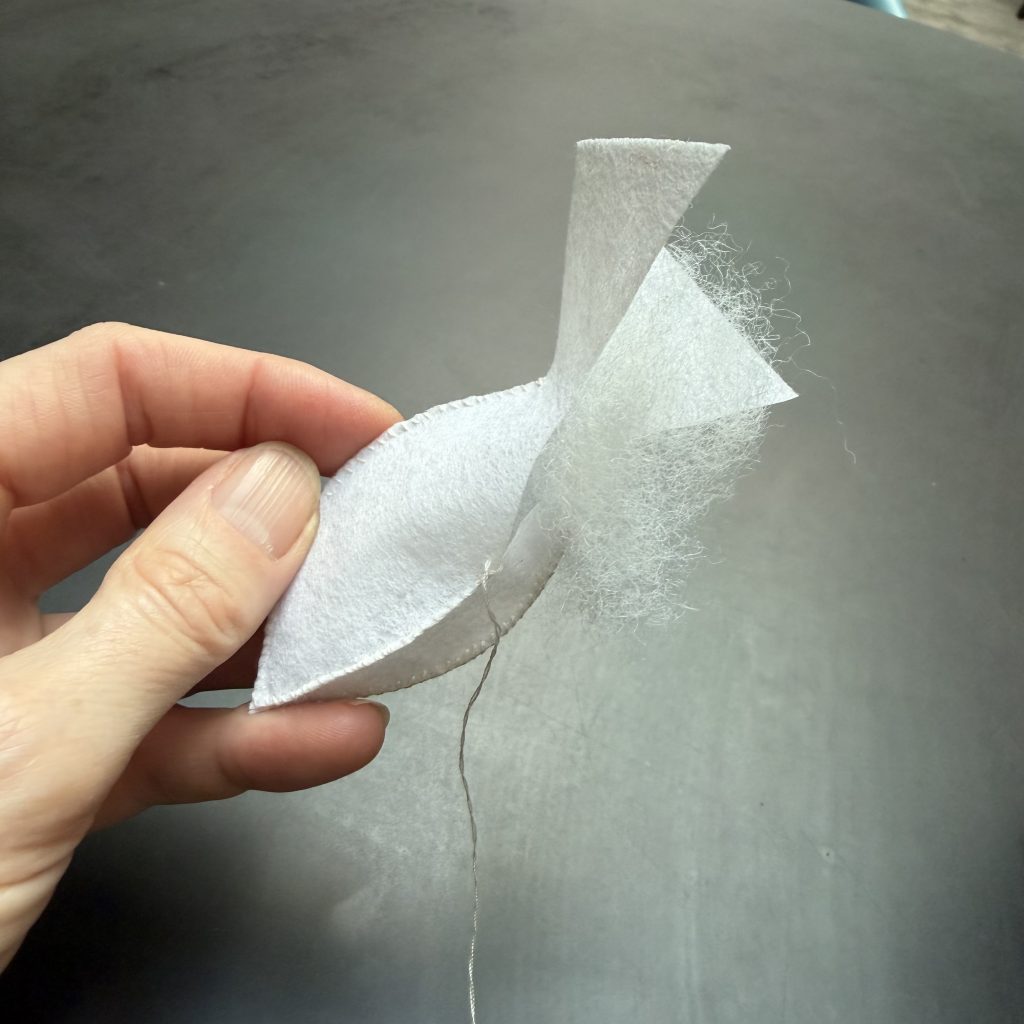
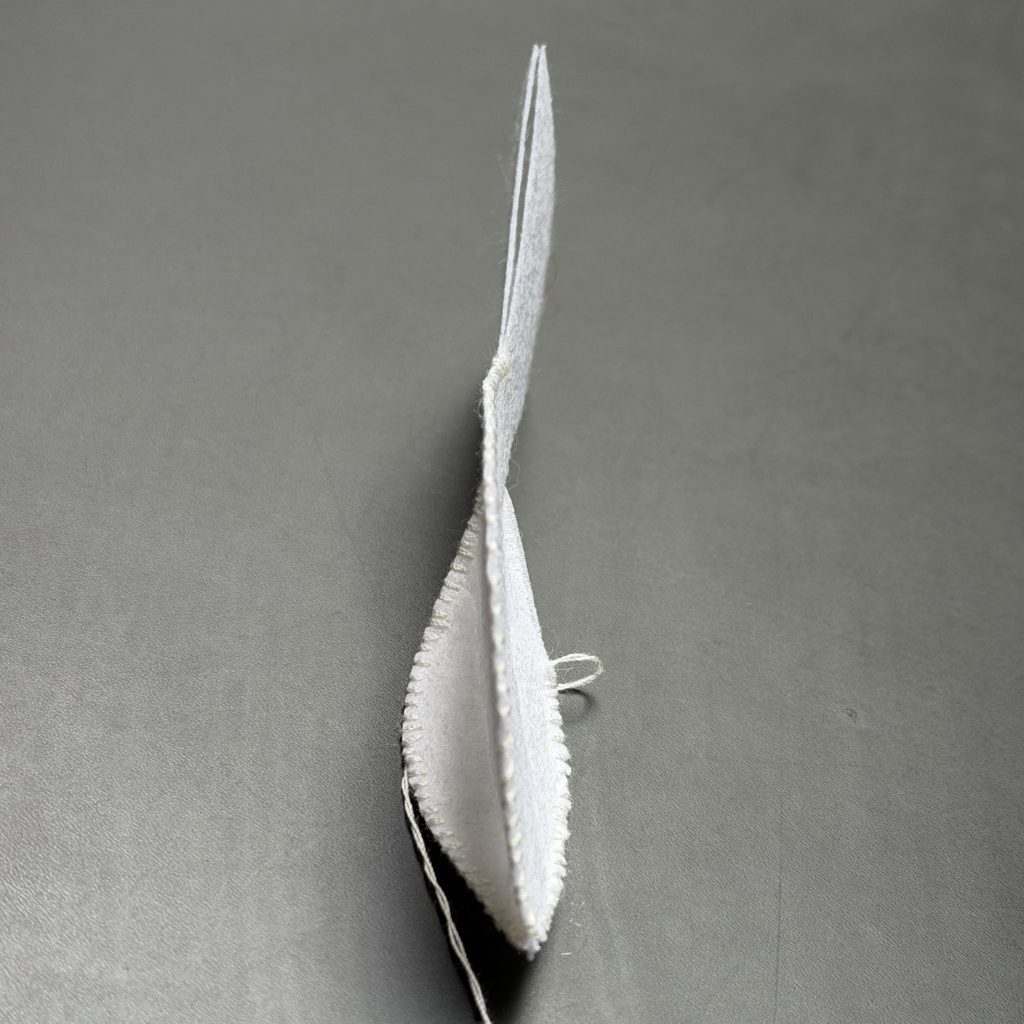
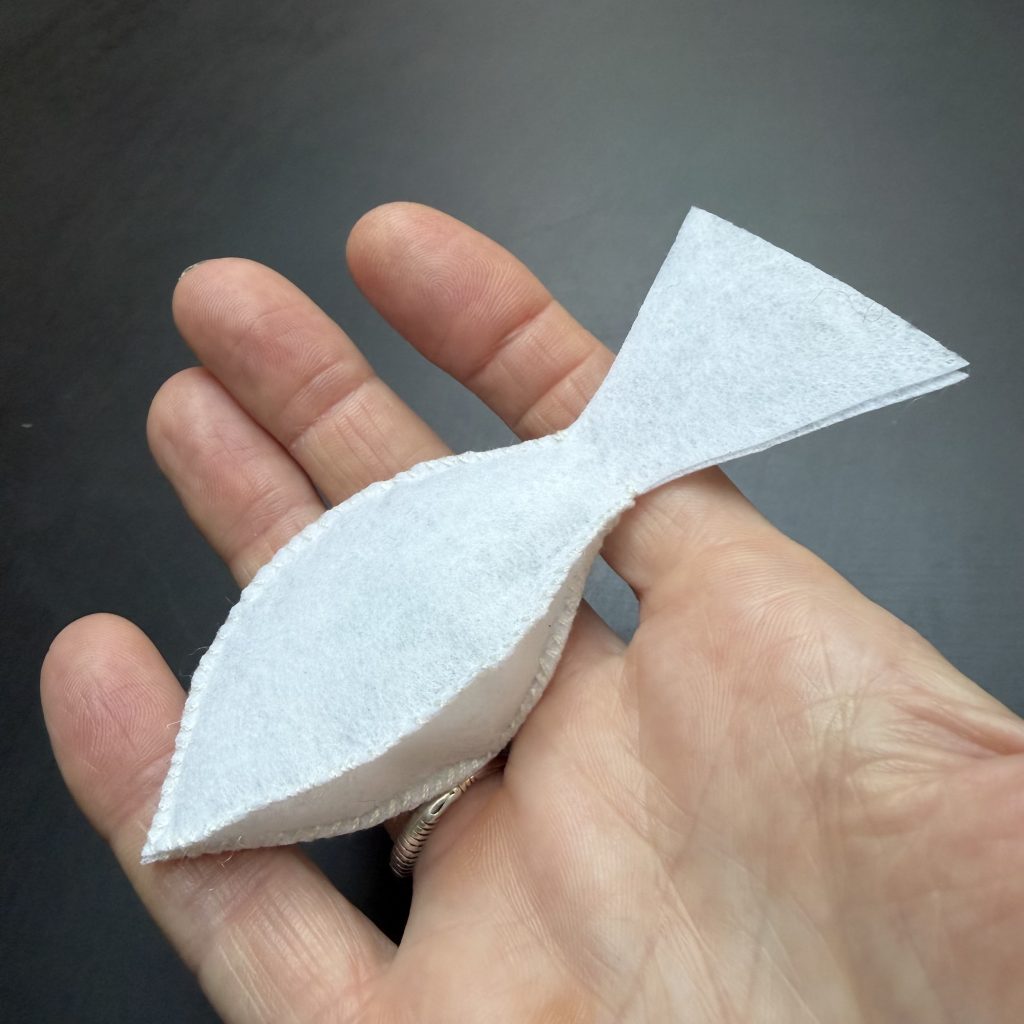
    As an alternative idea, and in align with the felt cat, I designed and made a ‘blank’ white fabric fish as an animated prop-blank for a 2D drawn animation. I have made 2 versions using Buckam fabric, both slightly filled with stuffing to give 3d appearance, one in 2 parts, one in 3 with a gusset allowing the prop/character to free stand when animating.  

    Buckram blank fish for test 2D animation shoot. Imogen Harvey-lewis. 2026

    I really look forward to learning how the 2d drawn animation is aligned with the 3D blank. I can see much potential in my own mixed media practice and my alignment with drawing and 2D.  

    As a magpie for ideas and technique which cross hatch my virtual-ideas-brain all the incite and practice this work experience is giving me feels enriching and expansive.  

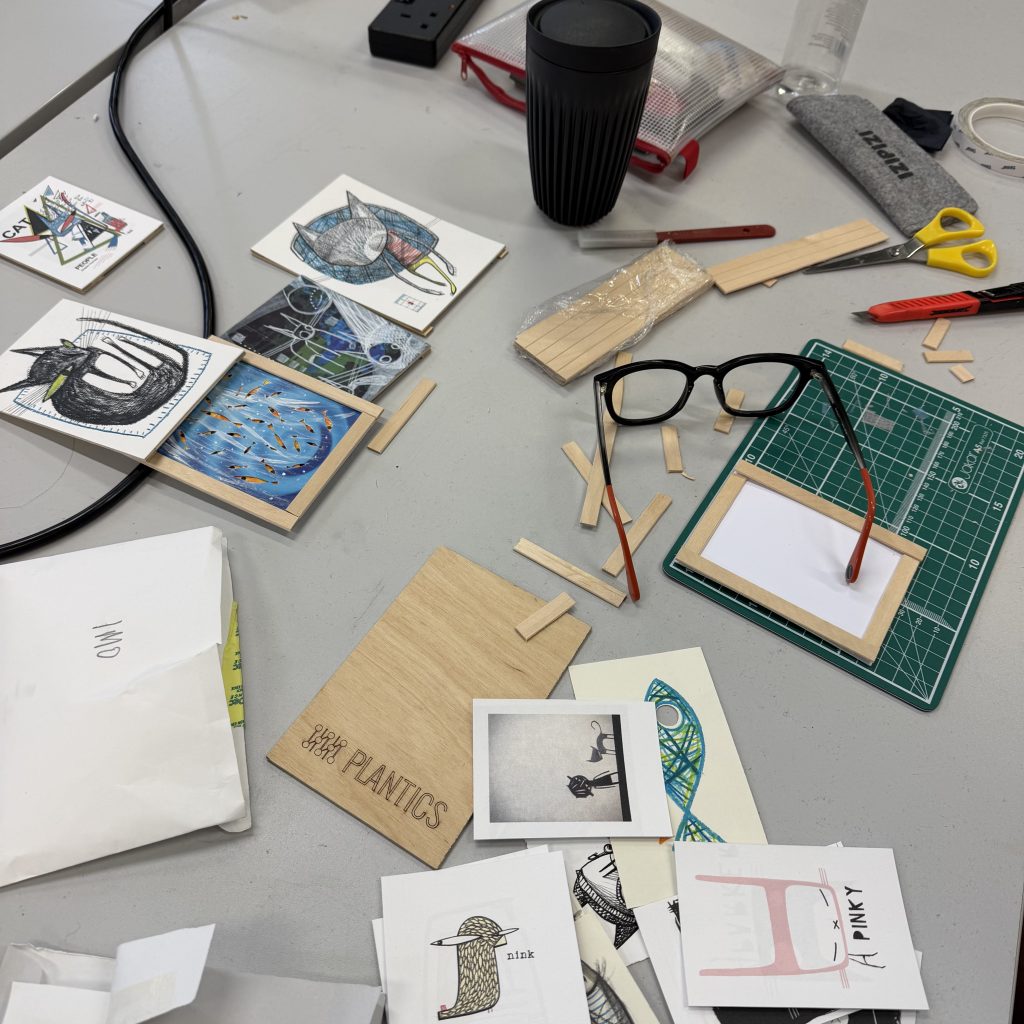
    I have also been tasked to create the art to adorn the Cat’s studio. 

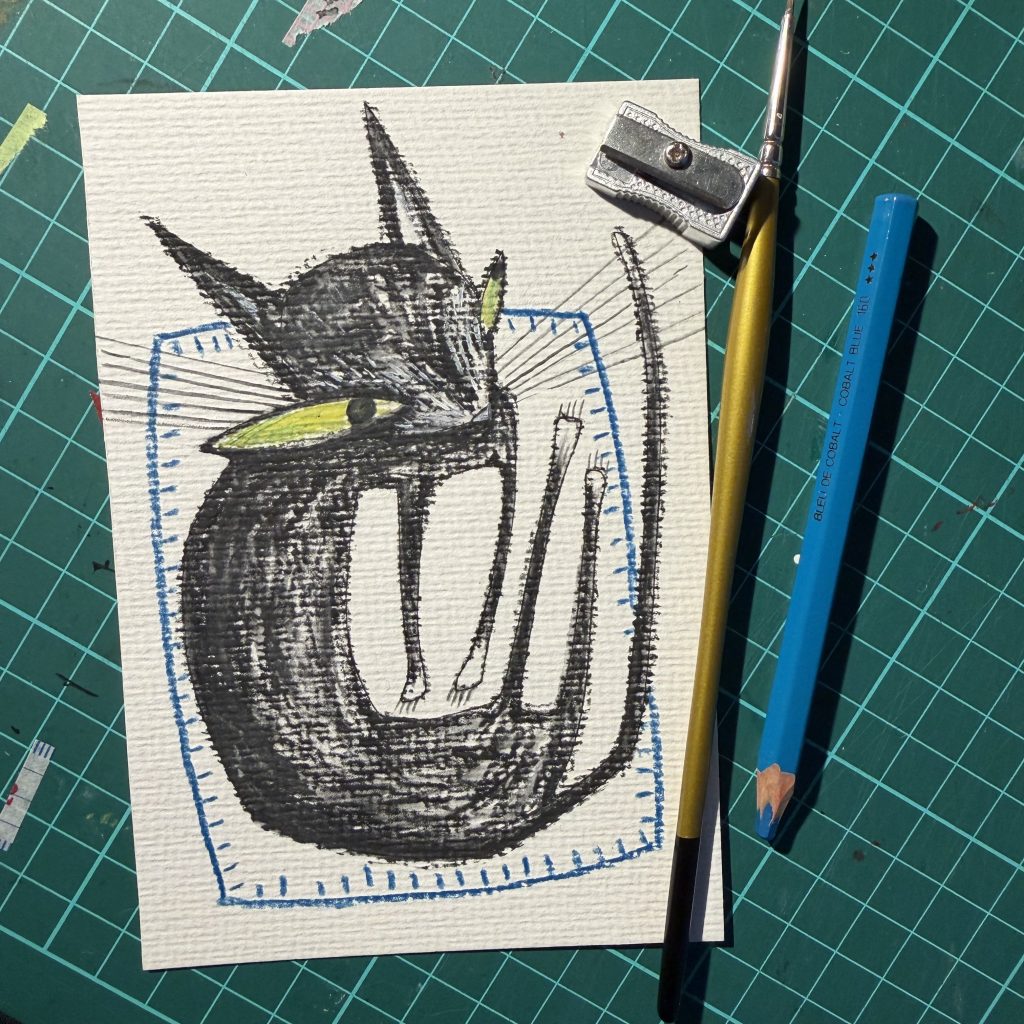
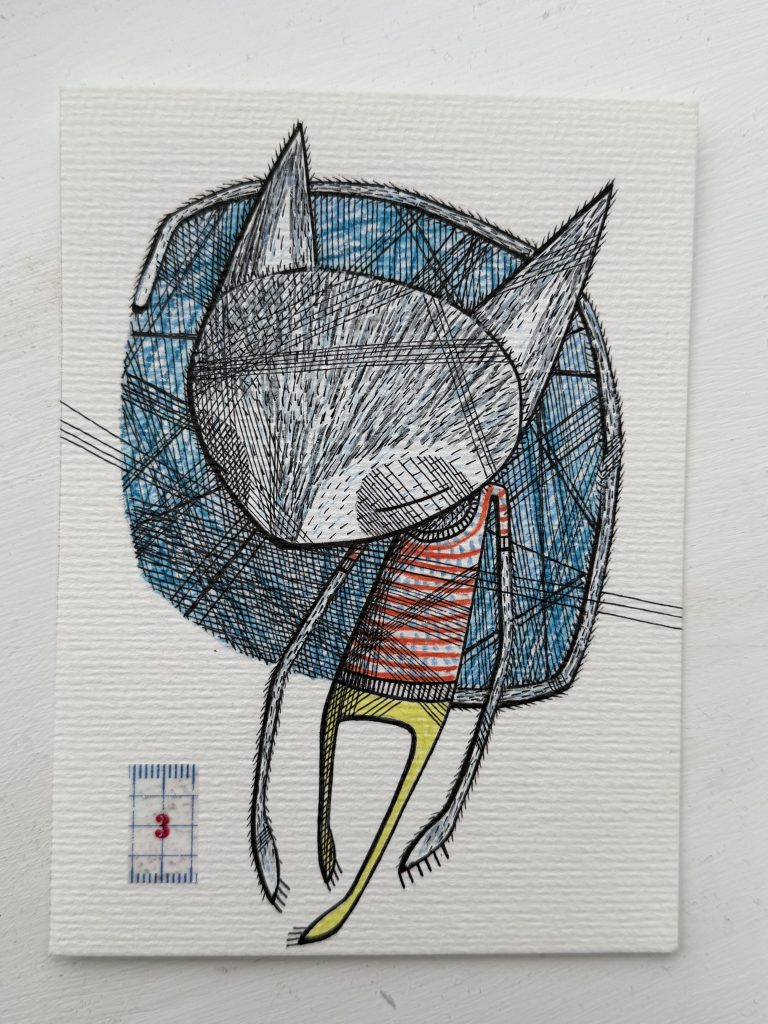
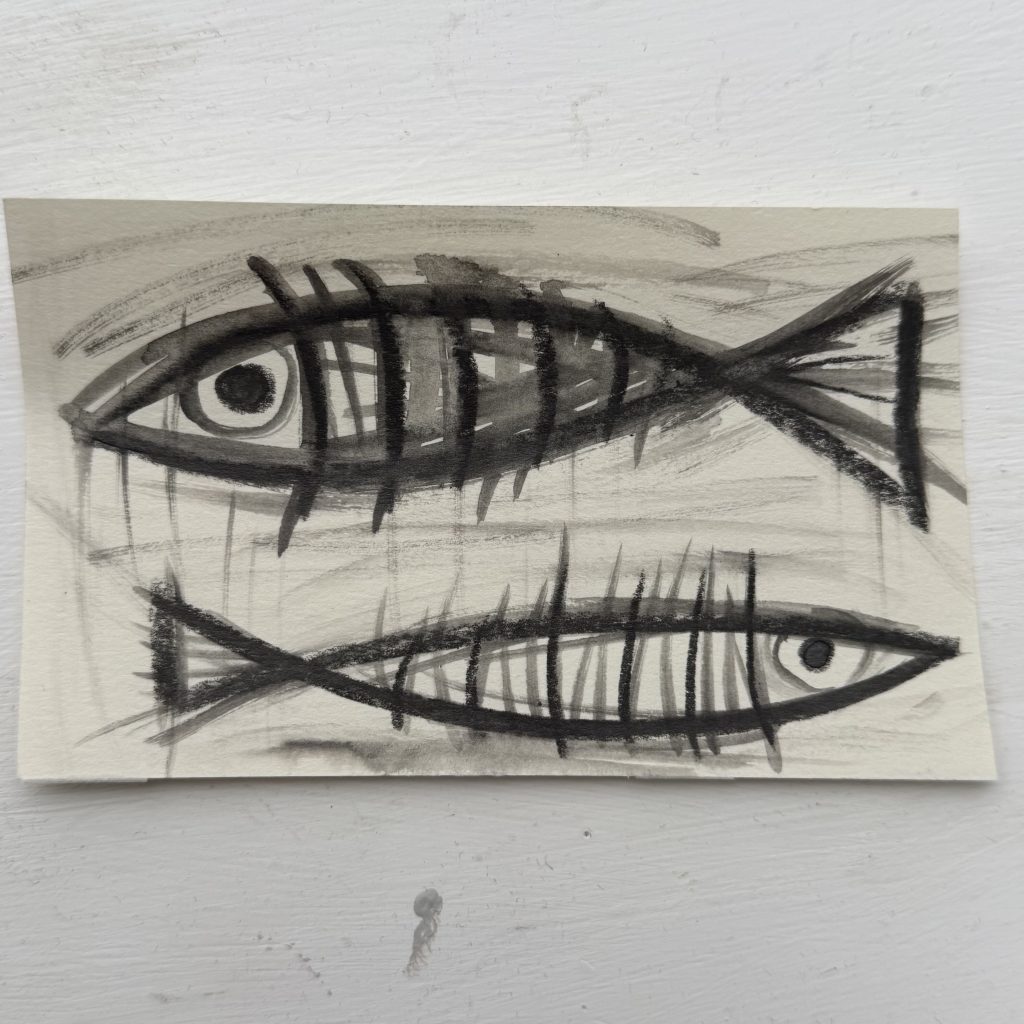
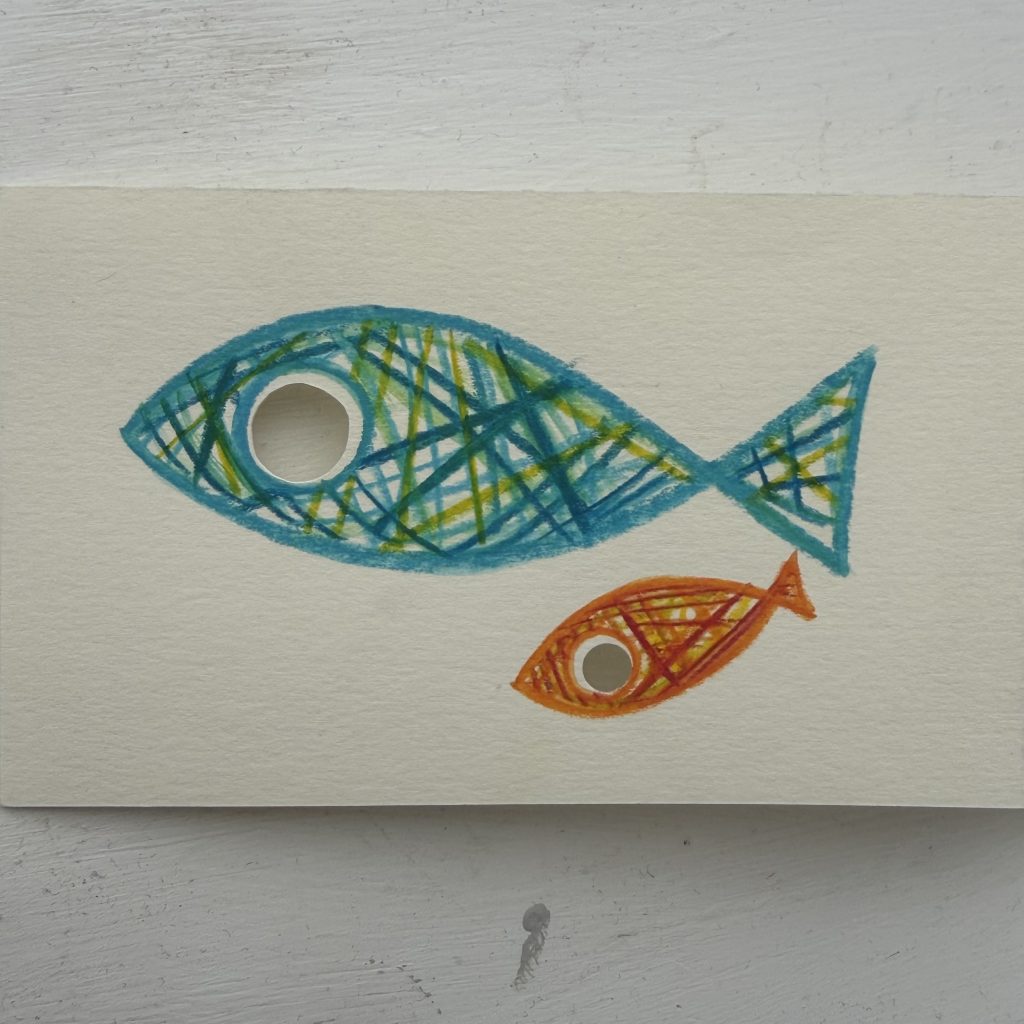
    Drawing on my illustration skills, these are miniature artworks along the feline and aquatic theme. I have tried to keep the range broad and have made plenty to give Lucia the option to choose those she feels best fits her design concept. I see that by incorporating a diversity of artworks, this creates a positive opportunity to expand the visual language of the set. 

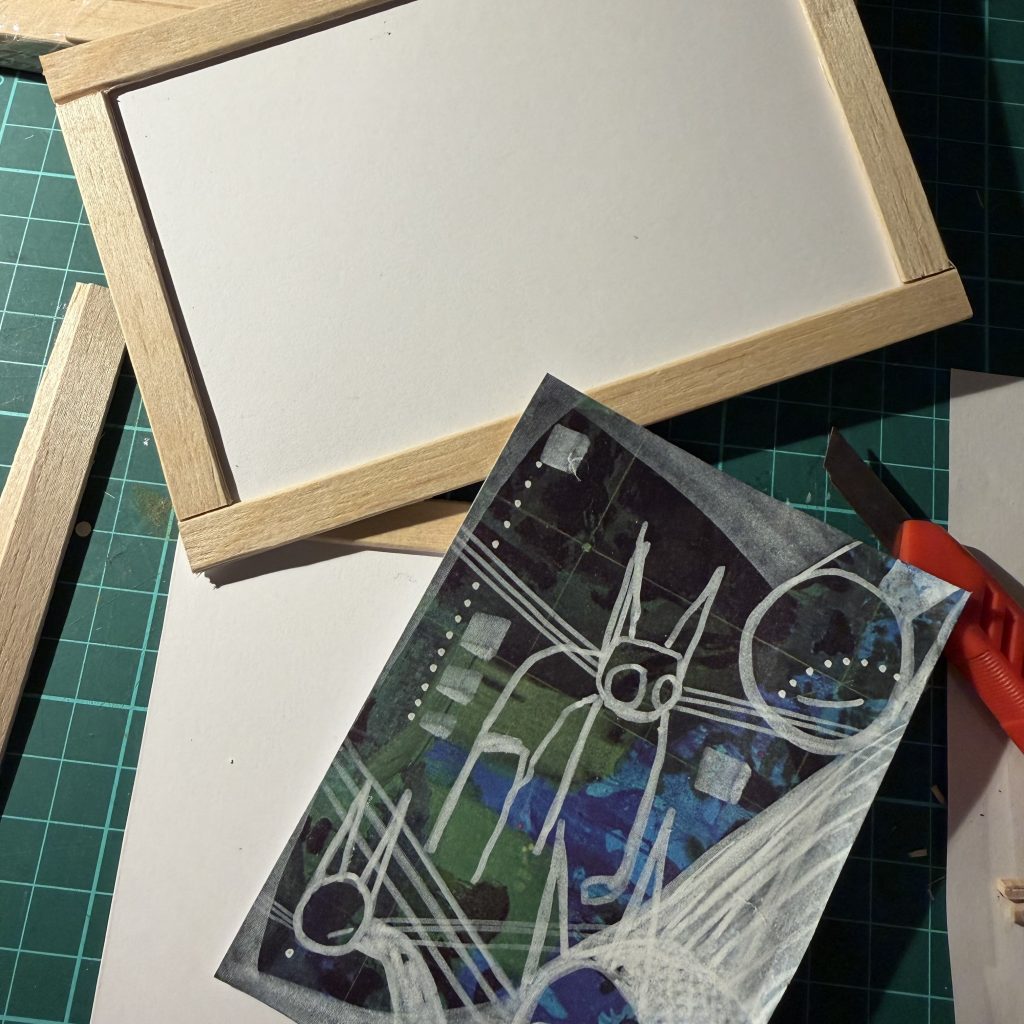
    Experiments in Art for Cat Painter’s studio. Imogen Harvey-Lewis. 2026
    Framing the miniatures too.

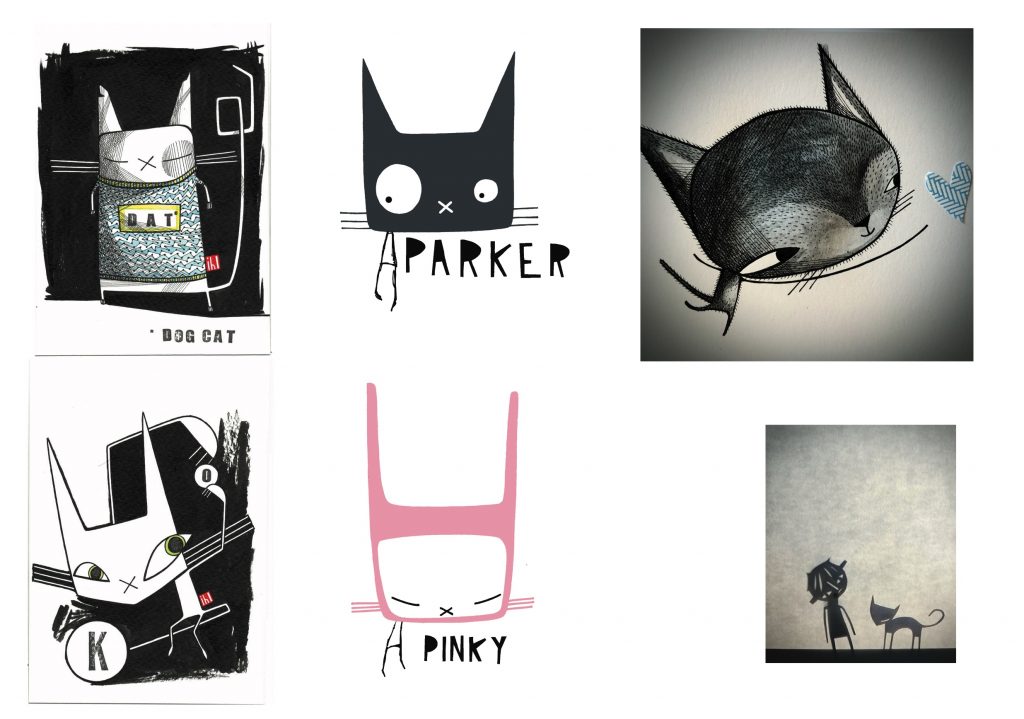
    The above artwork props where done at CSM, the images below are resourced from my portfolio. I printed, cut and mounted all. Some I framed with wood trim, some fixed up as posters for the set design.


    Cat related prints. Imogen Harvey-Lewis. Sourced for Cat Painter. 2026.

    Induction to the Costume workshop. 

    As part of the research and development of the design team on Cat Painter, we enjoyed an induction to the costume department at CSM. The intention for Cat Painter, is to learn how to make tiny puppet sized costumes. We discussed the distinction between fully functioning working costumes, which move and fit as actual clothes would, and purely aesthetic visual clothing. These do not need to move independently (follow through and realism) and can be stitched on (secure and homogenised). 

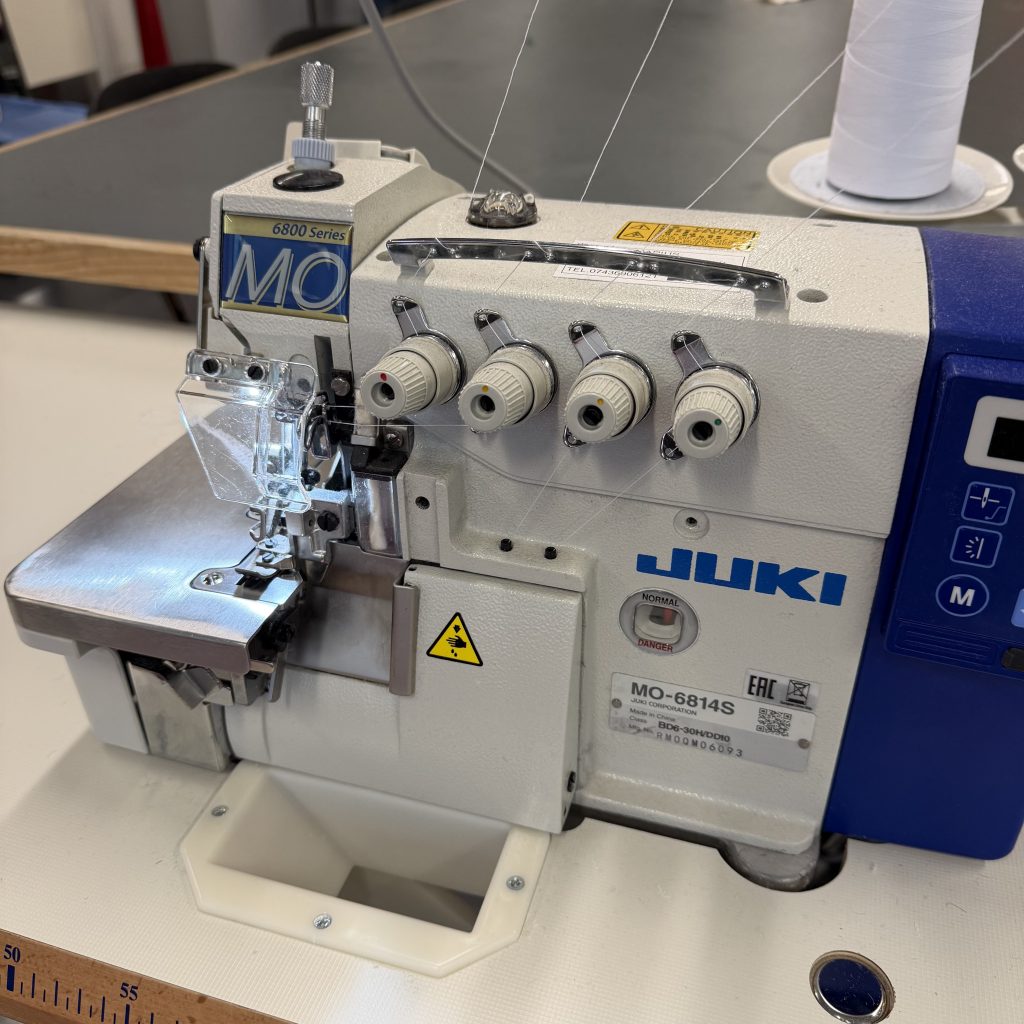
    Industrial Juki sewing machine CSM Costume Workshop

    Sarah (the brilliant technician) demonstrated a domestic Bernina sewing machines; an industrial Juki sewing machine – which is much faster and can cope with wider and thicker range of materials; an industrial and domestic overlocker – used to ‘finish’ edges without hemming; the steam iron; embroidery machine; and the knitting machine. Each machine was versatile and nuanced in what it could do. Inspiring and though provoking for animation ideas. If I was working within the animation industry, these machines would amply provide a professional working forum to tackle the majority of fabric based construction tasks.

    Costumes for stop-motion will tend to be small scale, so domestic machines will be the most appropriate, but all dependable on ideas, scale and the project in hand. I learnt that different fabrics move, hang, flow, attach, sit, crease, compress, stretch, etc., in a unique way.

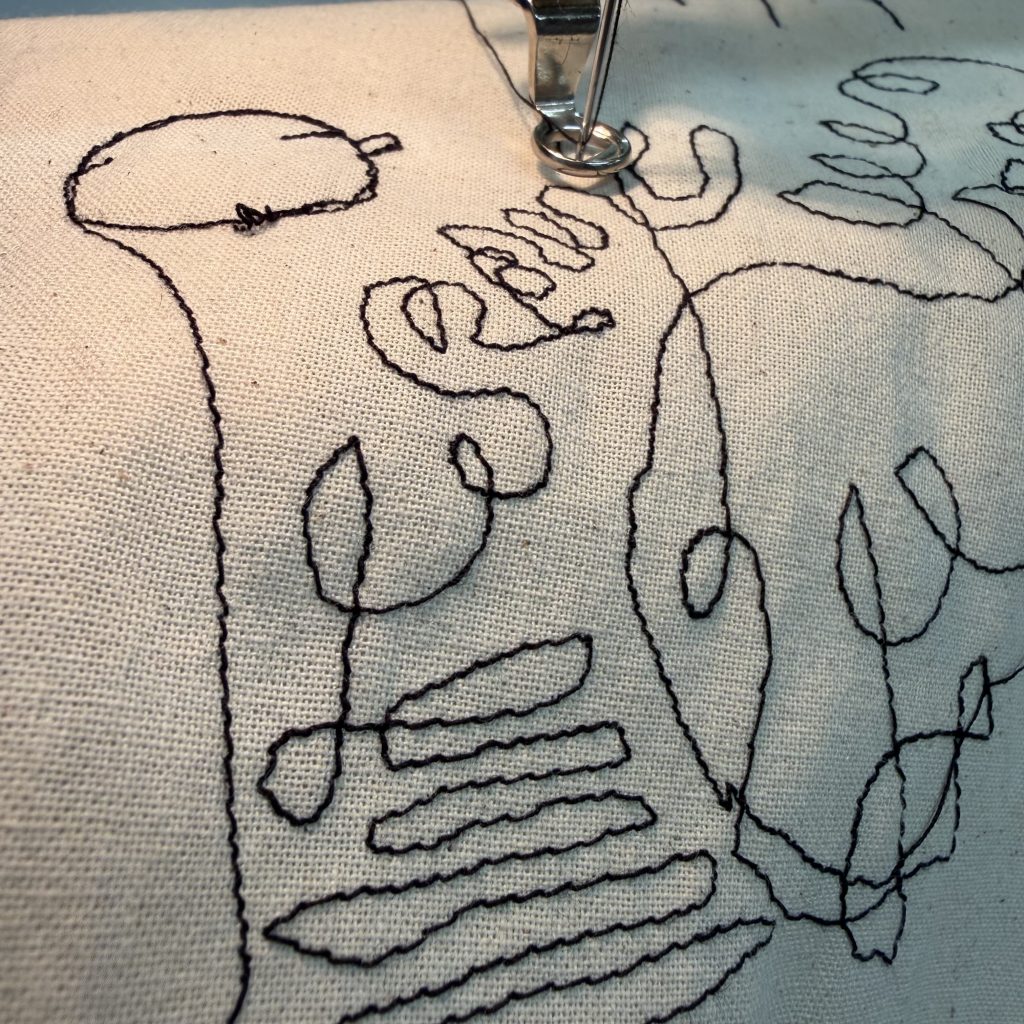
    Experimentation for Cat Painter costumes. Embriodery head on domestic sewing machine.

    We experimented on squares of calico. Different stich sizes, flows of line and reverse stitch. I enjoyed this. Sewing machines, as opposed to embroidery and applique, draw in continuous lines. There’s a speed and a flow which to some extent dictates a fluidity in the marks and patterns you are making. 

    Lots of ideas have come to me as a result of the costume workshop. In technique – Paper stitching; bookbinding simple animated flip books; suspended by a thread characters in stop motion; continuous line ‘drawing’ in stiches. In conceptual story lines – sewing things together; ‘fixing’ things (badly); repair; a stich in time; ‘Fabric’ – constituent parts of a whole….and more. 

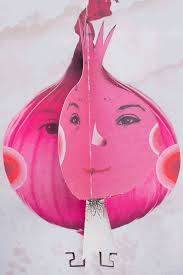
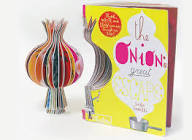
    Coincidently I came upon an image by Sara Fanelli Onion Head from The Onion’s Great Escape, published Phaidon 2012, the same day we did the costume induction. It is a paper stitched fold out head simply animated with a wink. I love it and will work up a short sequence in response. 

    The Onion’s Great Escape. Sara Fanelli. 2012.

    Reflections

    My reflections on my work experience on Cat Painter is that preparation is the key. A clear plan is essential to keep all the preparatory strands on point and to avoid unnecessary side tracks. Attention to detail is important but should not stifle the workflow. Keeping the momentum buoyant and inspiring makes for an energetic and enjoyable process.  Group work relies on individuals committing work time to coincide and complement each other. Precious time can easily be lost in waiting for other peoples availability.

    Balancing aesthetics with technical necessity has been a steep learning curve. How things look and how things work on set do not necessarily conform. In illustration, this is not such a dilemma. In animation however, which is a careful balance of the two, practicality comes first. The set, props and puppets must move, attach, animate, secure, light etc first and foremost. It is film making – a technical process. How things look  (I’m learning) comes a close second. One supports the other, but an animation which doesn’t animate, is not an animation.

    Bringing this understanding into my own stop-motion animation practice, I am determined to expand my working with different materials. Setting up multiple short sequences and shooting a few seconds, enough to feel the challenge, is invaluable ‘homework’ and will go to creating a bank of test shots for future reference and transference of skills.

    Coming to a new idea raw can be very exciting to develop, however having the experience of various methods and materials already tested to some degree makes for a more confident pitch.

    Supporting and being part of a team of animators has been an invaluable insight into the many variables and considerations which go into preparing for a short stop-motion film. Joining the team pre-shoot has meant my exposure to actually animating has been limited. I would have appreciated more time to support and learn during the animation process.

    I will be keeping in touch with the progress of Cat Painter over the next couple of months and if time permits lend a hand and learn as much as I can for Lucia and her team.

  • PAPER CUT ANIMATION  

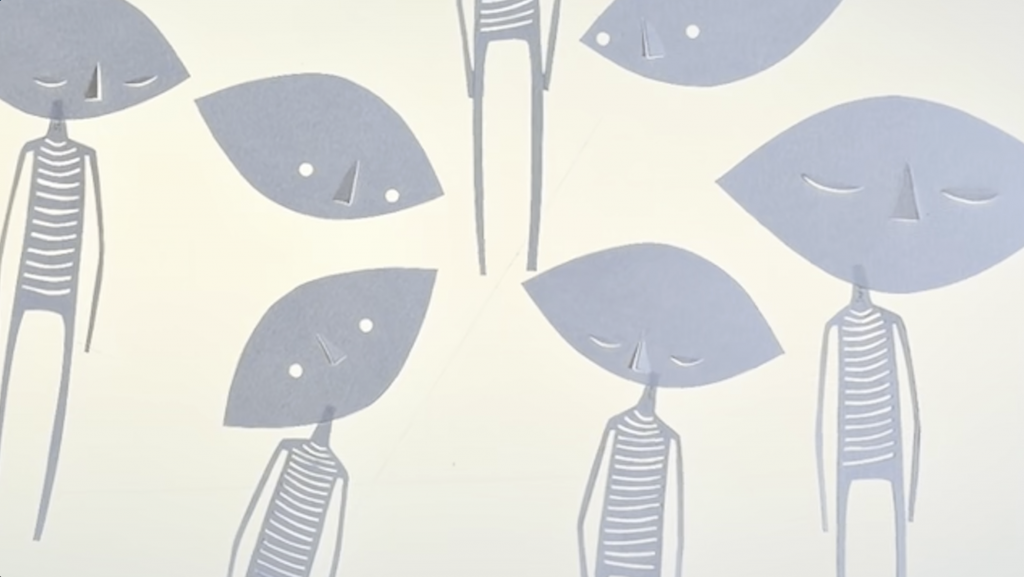
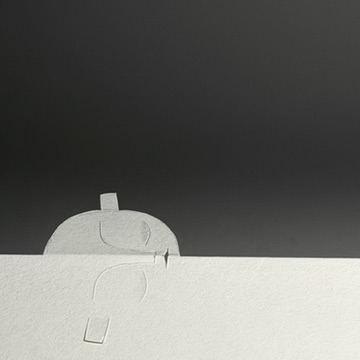
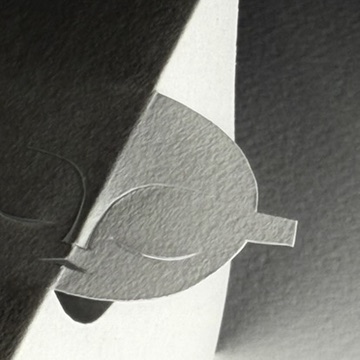
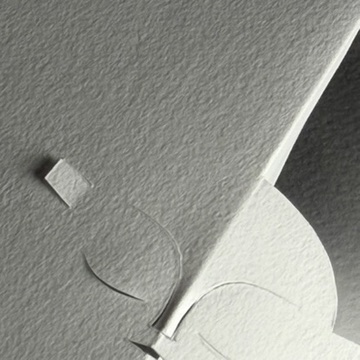
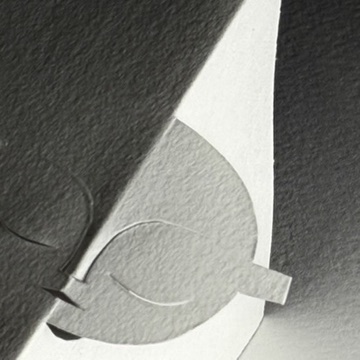
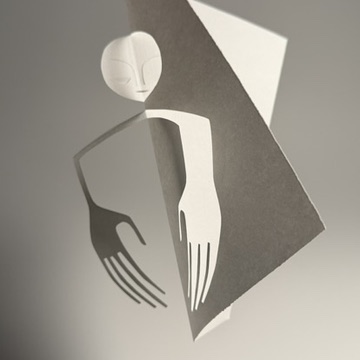
    A day spent paper cutting. Teasing out faces and character from a white plane of paper with an anticipatory view to creating simple stories in paper animation.

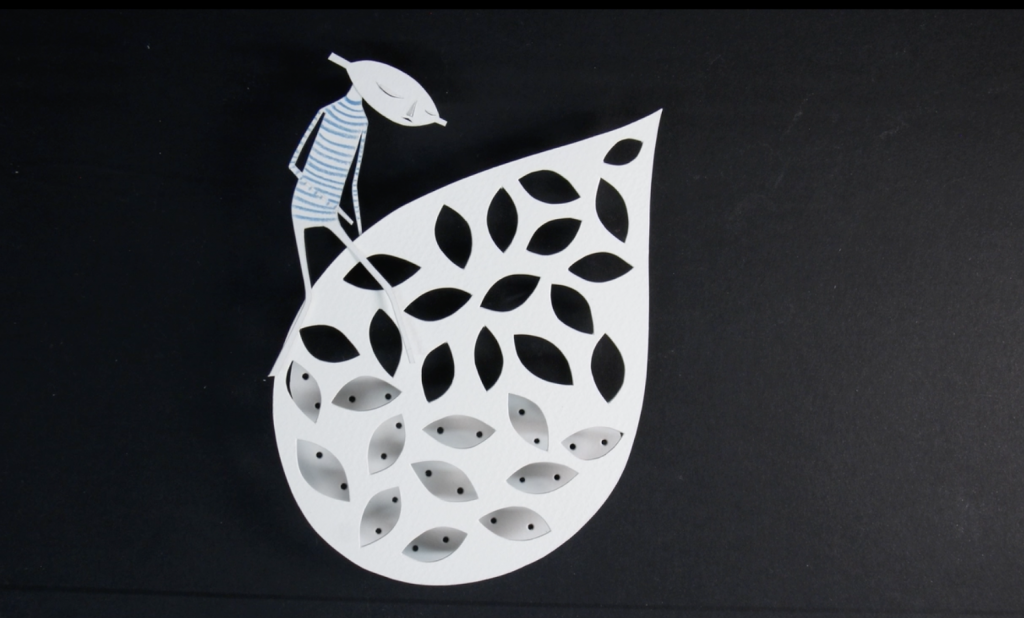
    Paper cut. Imogen Harvey-Lewis, 2026

    I am beguiled by minimalism.  

    Quietness.  

    Calm and slow.  

    As an antidote to the frenetic bustle of the human world, I am trying to grasp an essential aesthetic communication of suggestion, evocation, initiation. And for that to land with the viewer with an openness and an invitation for reflection and response. 

    Paper cut faces. Imogen Harvey-Lewis, 2025

    I want my animations and illustrations to provoke a thought process which is conversely fresh and free of preconception: a thoughtless-ness. For them to present a simple suggestion of easy conversation whether with oneself or another.  

    As with any art form, I wish them to present an invitation to reflect. 

    My methodology in creating the work is a combination of ideas and empathy. Drawing from my personal interactions with people, feelings, emotion – I fall back on the weight stone of ‘what would I do, think, feel, if this were me?’ 

     To my audience I foresee my animation artwork as a simple uncluttered ask: What do you think? How does this make you feel? 

    The white paper gives breathing space and calm to the frame. No rush, no expectation and no right or wrong response. 

    Paper cut Two Handed Imogen Harvey-Lewis, 2025

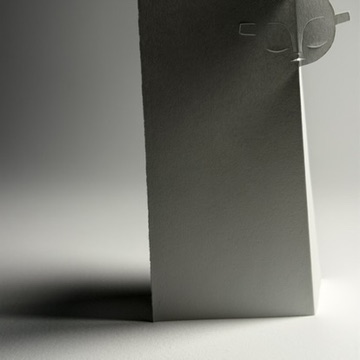
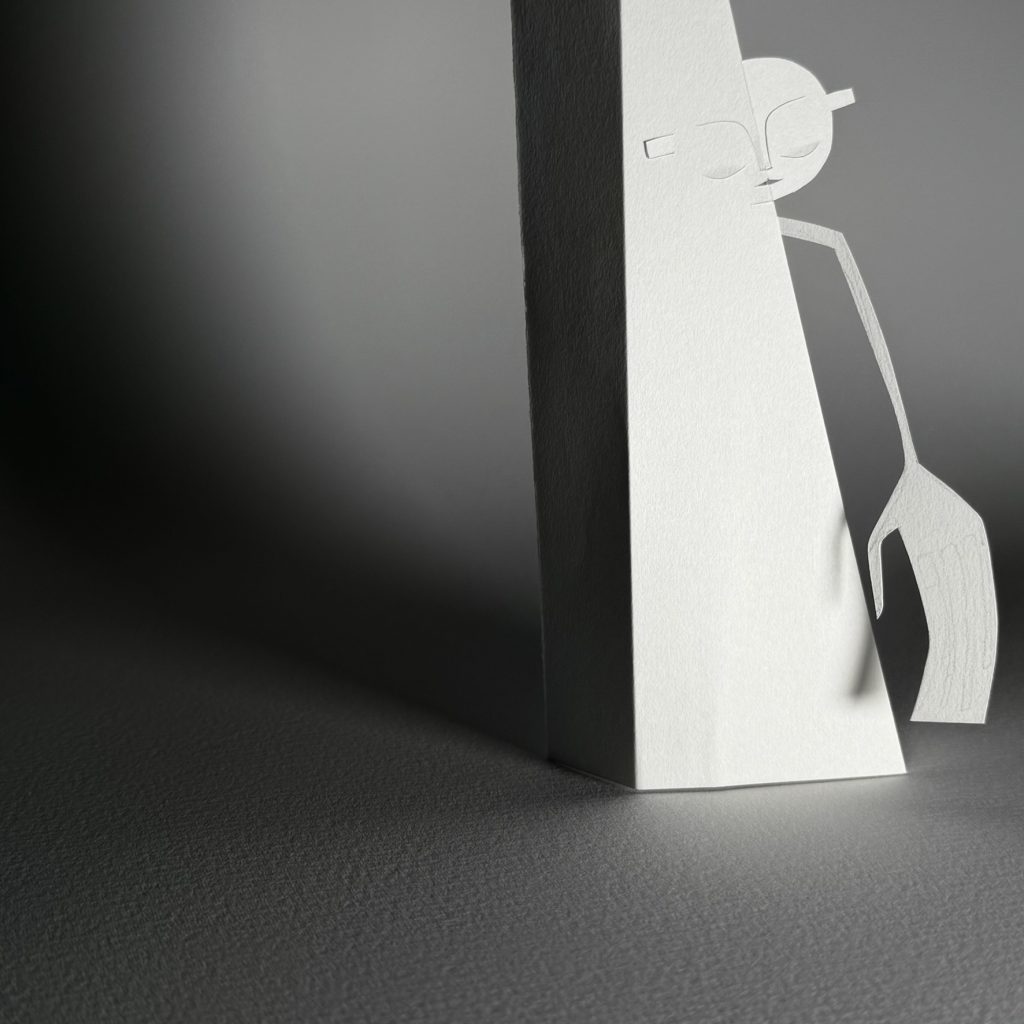
    I like the half outline of the head, so that though facial features are mirrored, only the cutout side folds out and reveals its profile. This gives multiple options for folding and viewing the face. As papercutting creates lines which are double sided – present in reverse on both sides of the paper, when pushed through and folded, the negative space of the facial outline reveals variable views and insights. Again, simple, but exciting and intriguing as to how to explore the sculptural space. 

    Paper cuts. Imogen Harvey-Lewis, 2025

    In line with my early animation journey so far, it is another exploration and attempted realisation of 2D into 3D. Not rocket science, but as I have been happily drawing flat 2D my entire life, this tantalising shift into a 3D variation of 2D is a systemic shift for my creative output.  

    This is definitely not auto pilot.  

    Booking out photography equipment from the CSM Loan Store for the first time, my initial exploratory process was to take a series of simple photos to document multiple options for composition, expression and lighting. 

    Manfrotto Photography tripod 

    Smartphone holder 

    RGB LED panel Light 

    The evocative nature of shadow is an exciting aspect. The positive and negative spaces of the papercut figures are augmented by the high contrast extremes of light and shadow, sometimes softened by a merge of greyscale in-betweens.  

    This is an early-stage exploration of aesthetic with a view to developing a language of evocative story telling through 3D paper manipulation and inventive animation. I imaging bringing in 2D drawn animation to cohabit with my paper characters. Stop motion sequences alongside paper-scapes and found objects. 

    Let’s see what happens. 

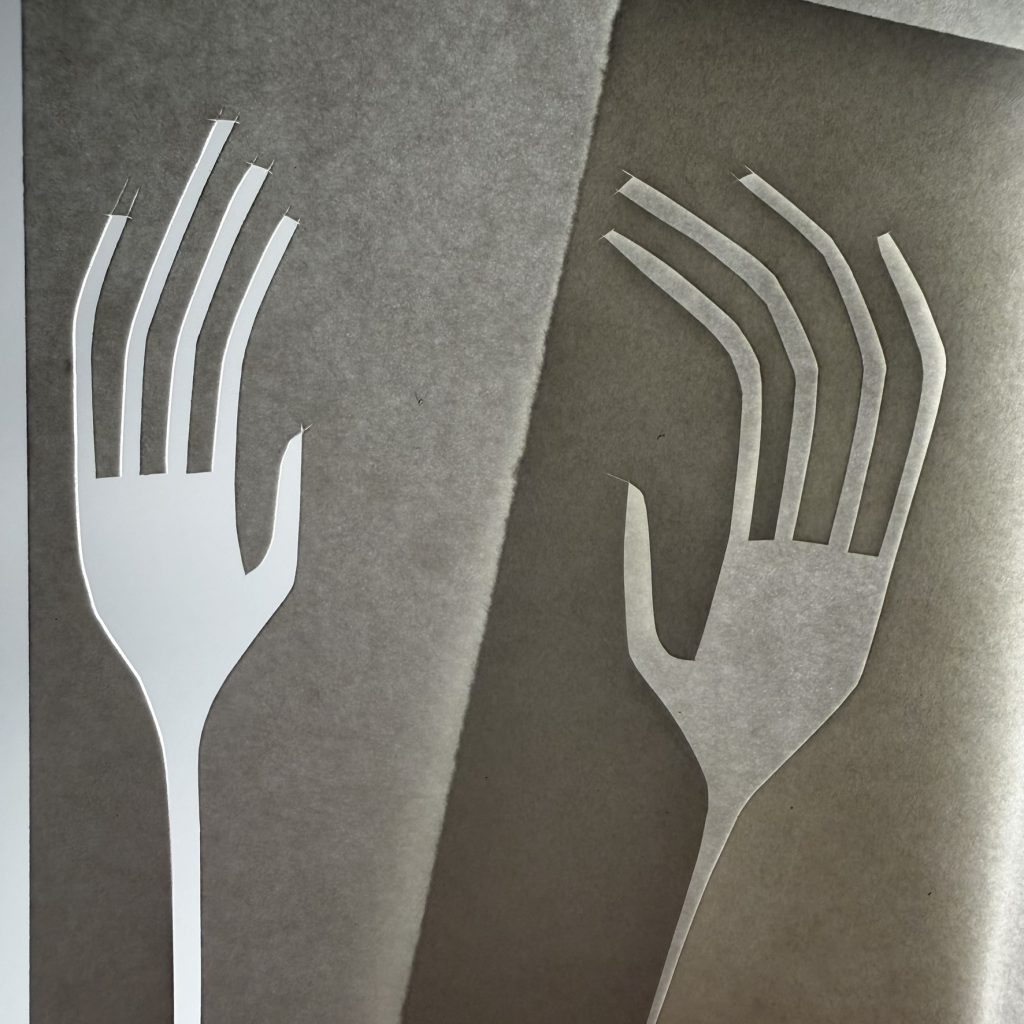
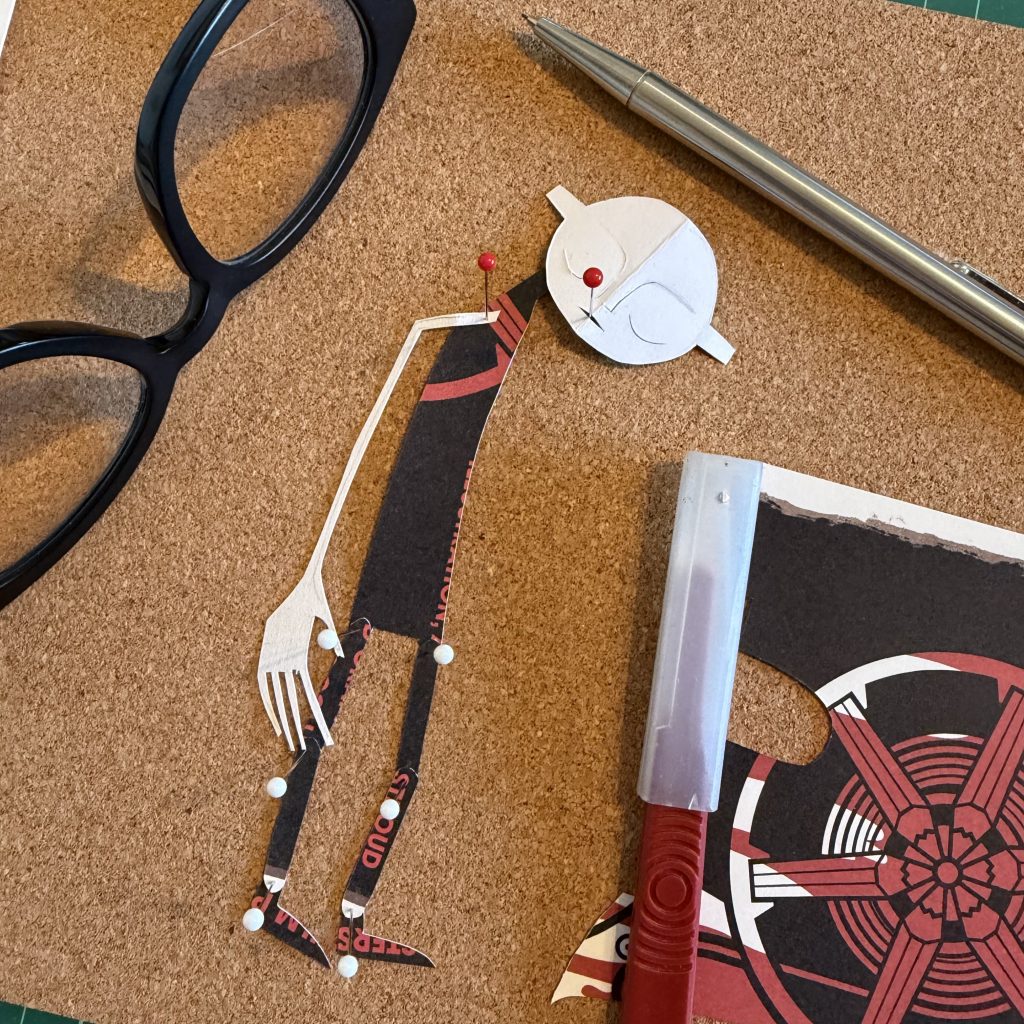
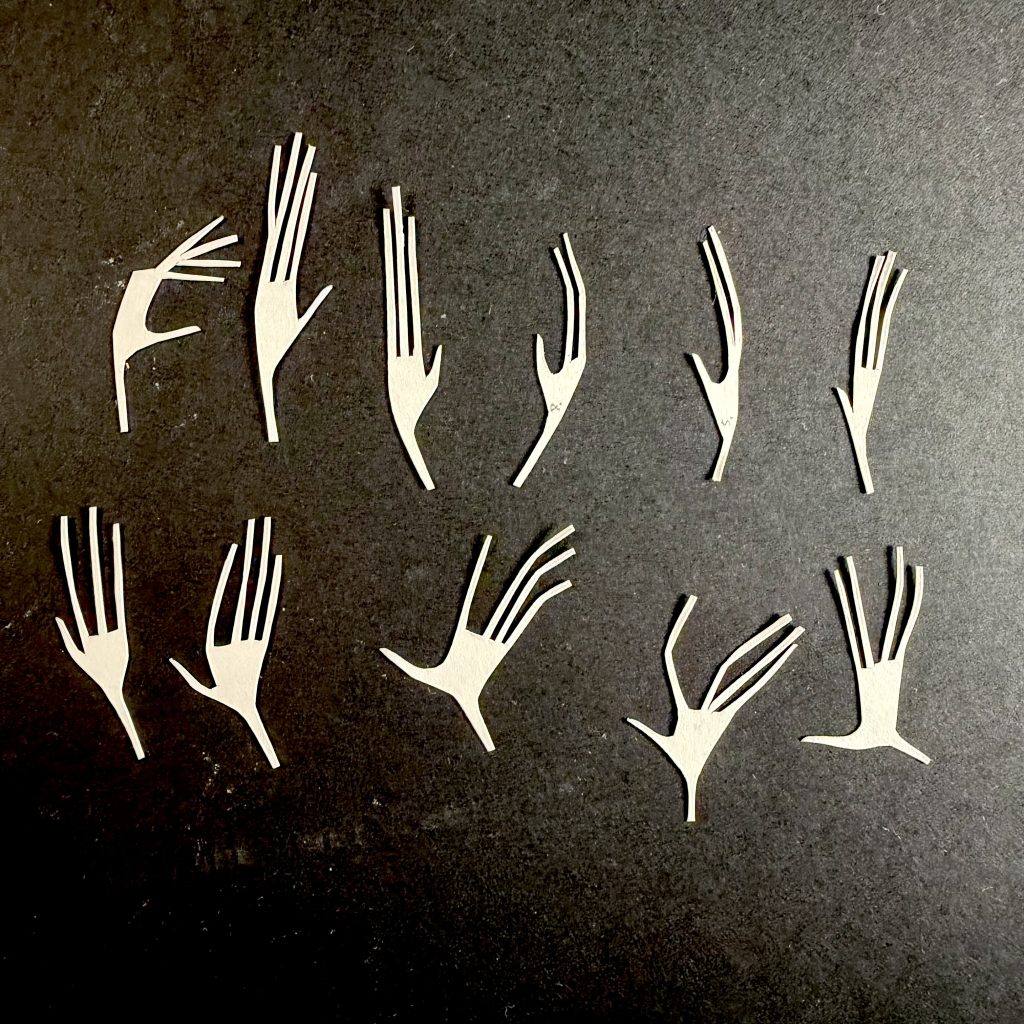
    Paper cut replacement hands. Imogen Harvey-Lewis, 2026
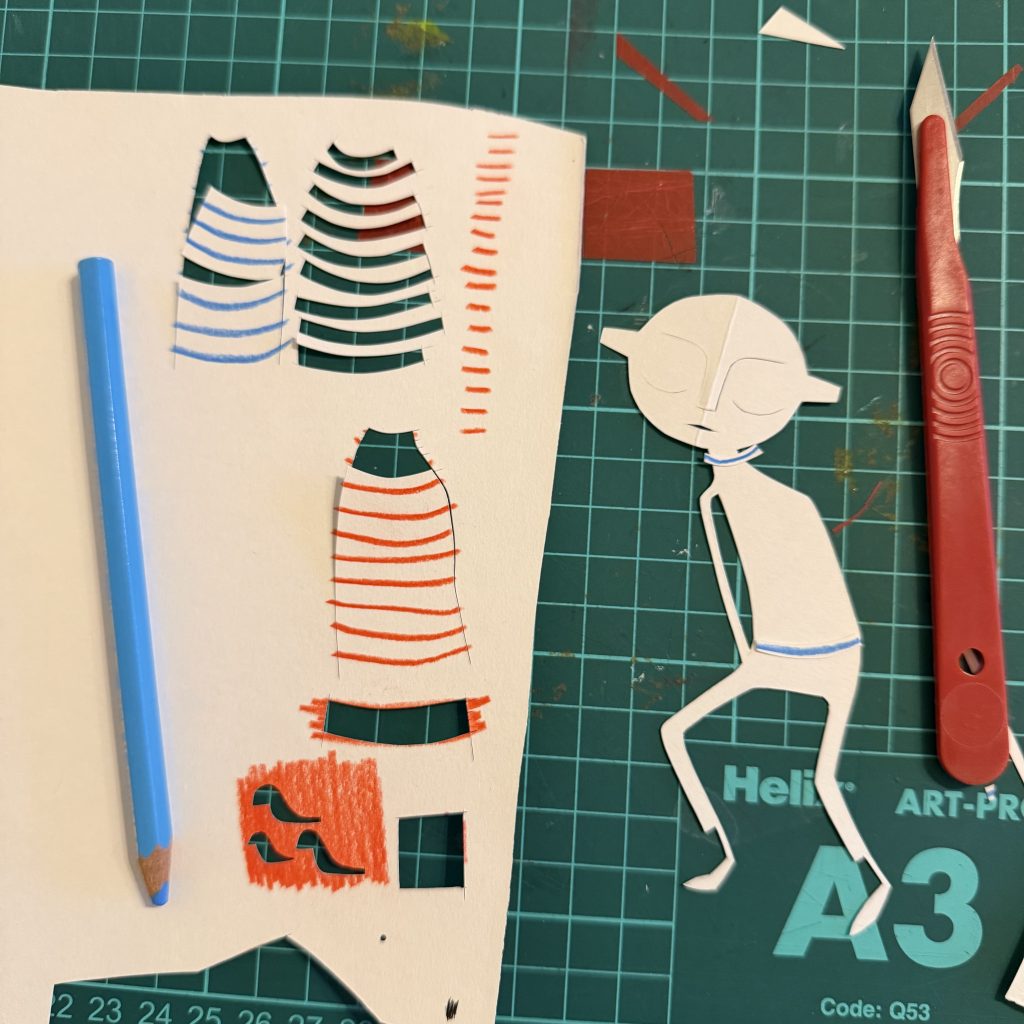
    Cutting mat. Imogen Harvey-Lewis, 2026

    My paper cut animation trials to date are going well.

    Preparation is the key. I am leaning towards flat bed top down shooting. Either cutting multiples and replacing variables, such as hands and faces, frame to frame – seen here in my short animation excercise House 2026(Imogen Harvey-Lewis): https://vimeo.com/1171514890?fl=pl&fe=sh

    Or creating a movable 2D paper puppet, incrementally animating component parts – seen here in Love Letters 2026 (Imogen Harvey-Lewis): https://vimeo.com/1171509075?fl=tl&fe=ec

    Still from LOVE LETTERS. Imogen Harvey-Lewis, 2026

    I quickly have realised that timing is key. Interlacing observed real time with the impact of theatrical emphasis to create a believable and consistently engaging storyline. Snapping to a key frame to add dynamics, or easing in and out of a graceful movement sequence.

    Numerous takes with my paper characters, playing with minimal variables is a great way to learn and work out a visual language that I can run with.

    If limitations are the key to creative thinking, then creating animations in paper is definitely an exciting work in progress.

  • Buss Stop

    Simple drawing adaptations from 2D to a feasible 3.

    Ok, I’m a beginner in animation.

    I am quickly realising that creating 2D hand-drawn animations which ‘pass-off’ as 3D is not a straight forward task.

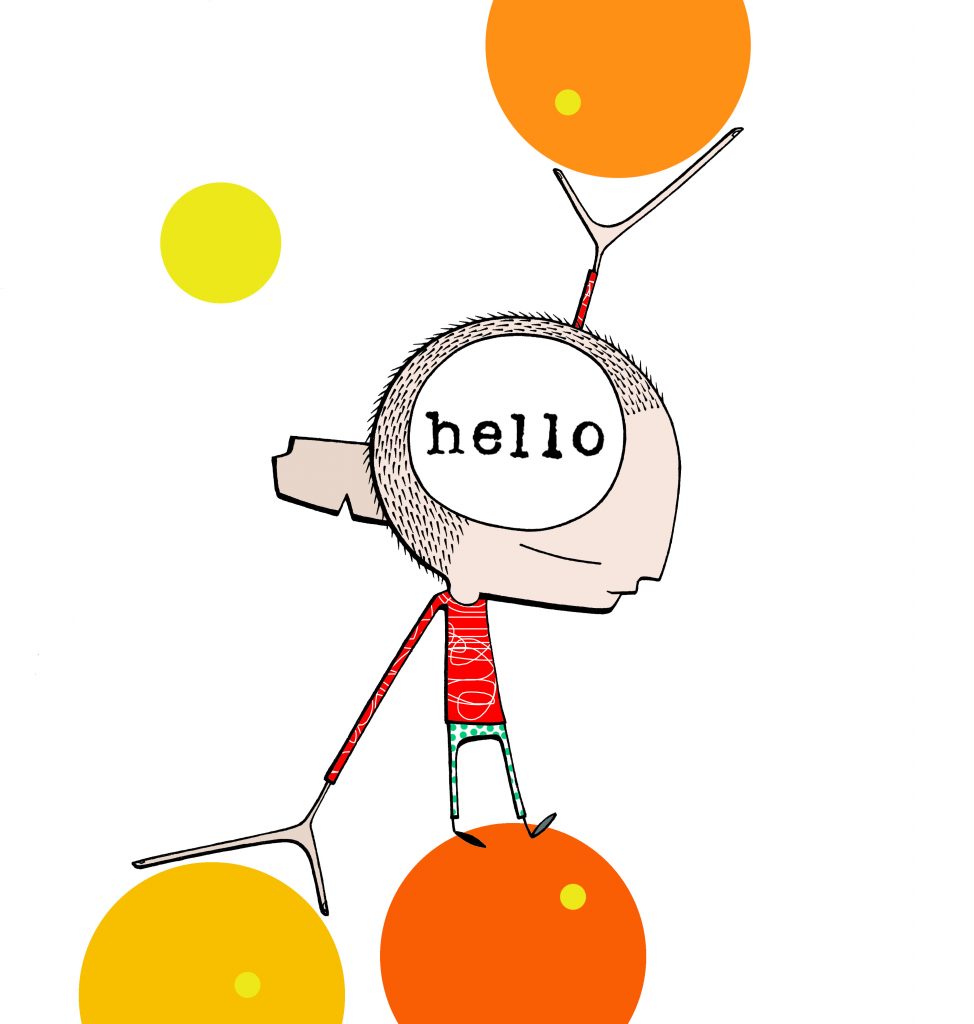
    Hello (2025) hand drawn and photoshop graphic. Harvey-Lewis, I

    My years as a 2D illustrator working primarily on paper, has not challenged me to give life-like form to my stylised characters. My preference is to draw flat. With my graphics head on, my delight is in the augmentation of constructed 2D form, creating expressive characters through exaggeration, distortion of scale and playfulness. Outlines are all. Clean, intentional and adapted, in order to communicate with optimum clarity.

    All good when a single image can stand alone, stake its claim and grab attention solo.

    Leeds (2024) Harvey-Lewis, I

    Not so ideal when needing to animate a readable sequence. For one unfeasible image (though it may work brilliantly as an illustration) to link and flow into the next, throws up a whole panacea of problems.

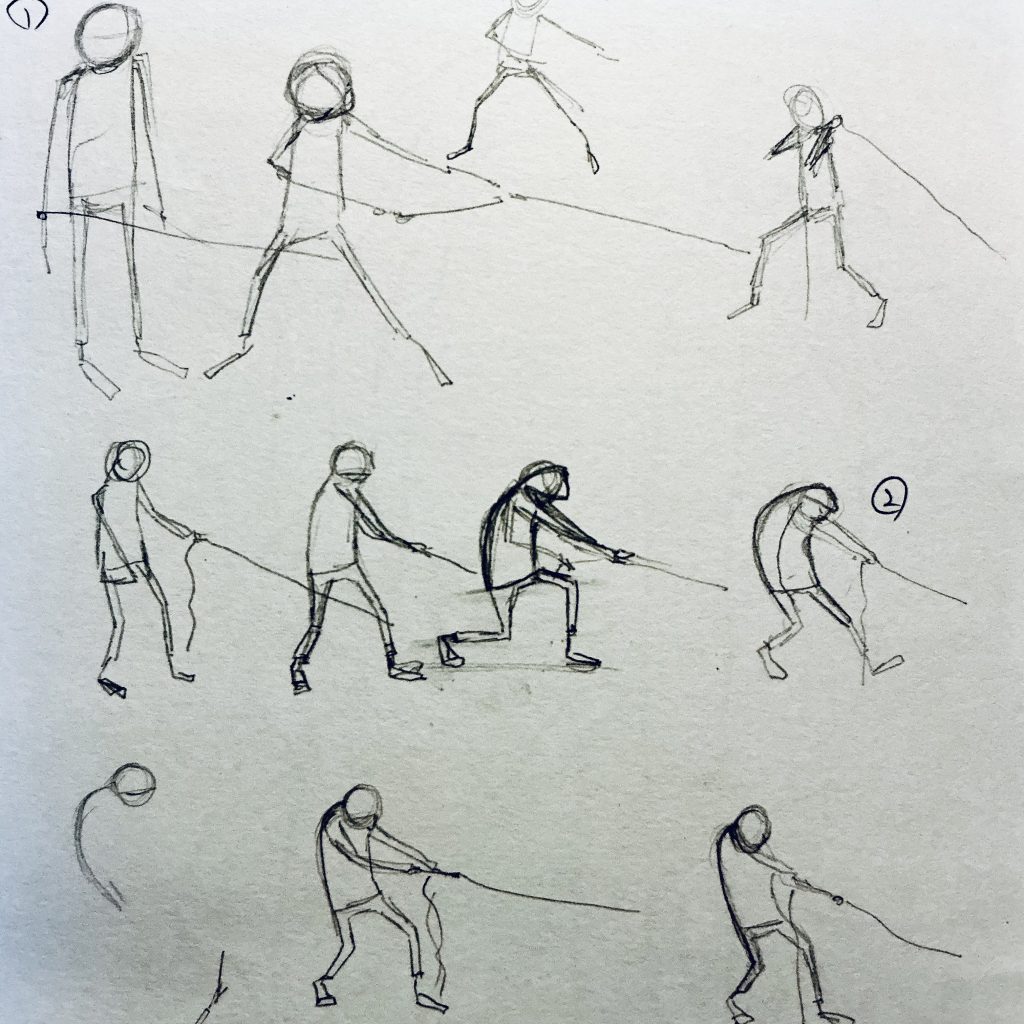
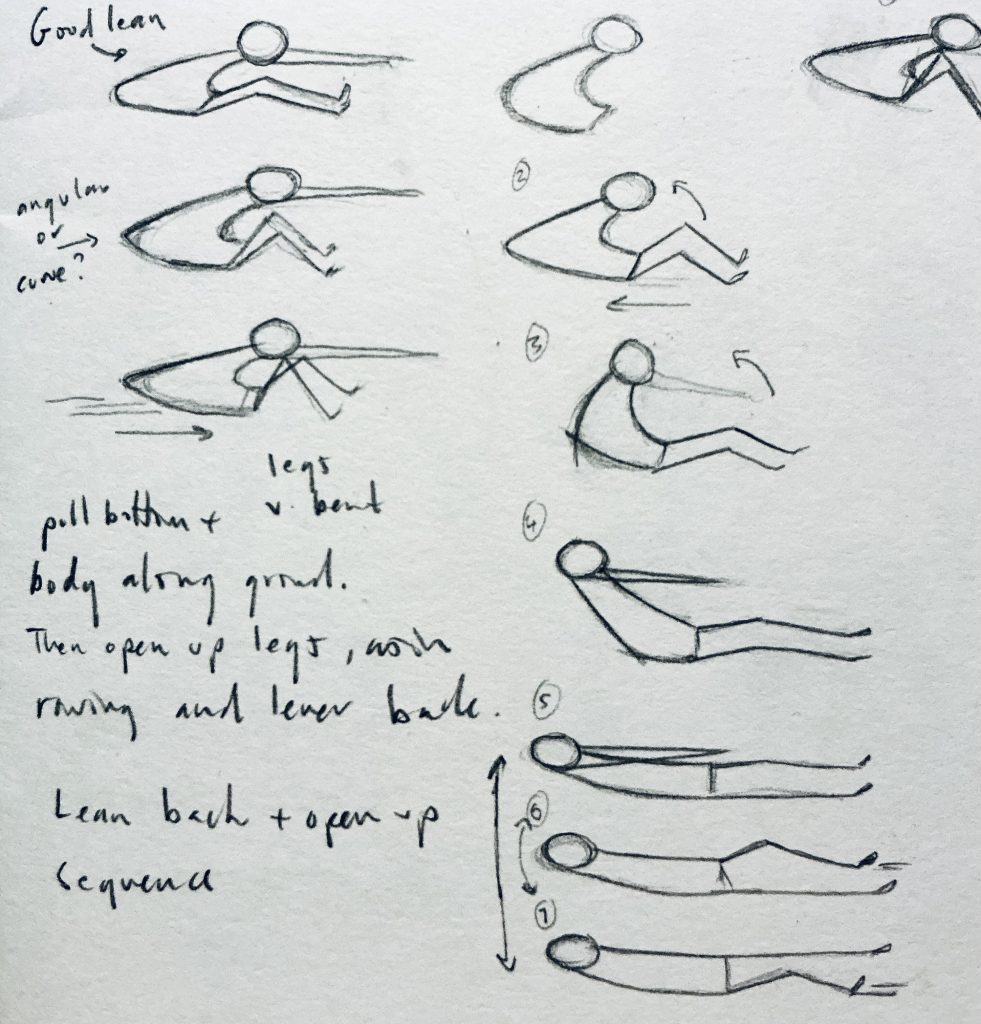
    In my first few weeks of animation at UAL we are being taught to key-frame a simple scenario, a pull cycle where a simple character encounters a challenging battle with a very resistant rope. Key frames in place at the extremes of action, the in-betweens create the flow and continuity.

    Quick sketch drawing for Pull animation exercise (2025)Harvey-Lewis,I

    As my first figurative animation task, I have found it engaging and challenging. Bringing into play the 12 Principles of Animation we have covered so far: exaggeration; ease-in and ease-out; follow through; squash and stretch; and timing, the animation has shaped up OK. It’s rough, and in its initial stages, but it kind of hangs together.

    Quick sketch drawing for Pull animation exercise (2025)Harvey-Lewis,I

    However, animation techniques aside, I am faced with the fundamental task of making my characters hang together as believable 3D beings with body parts occurring in some sort of continuity.

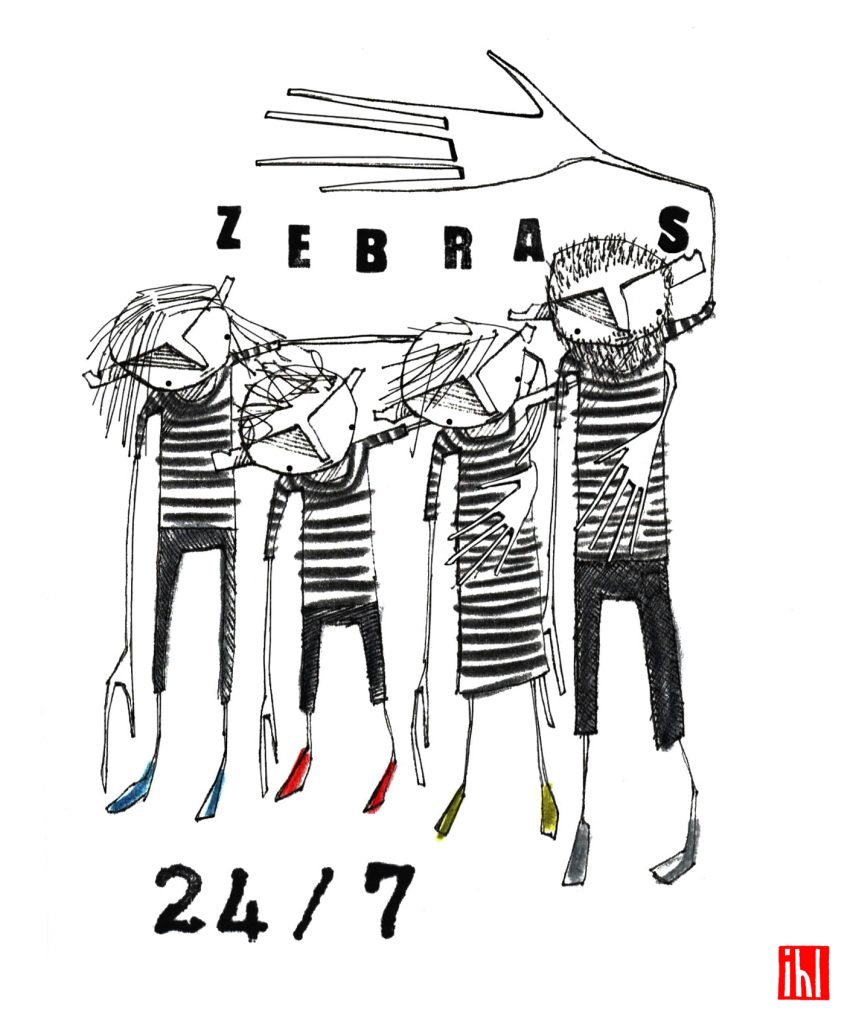
    Zebra’s 24/7. Illustration, Imogen Harvey-Lewis. 2024.

    An early problem -as I see it – my character drawing style to date rarely include necks, or the suggestion of one. I really like the ‘slouchy, simple head on torso’ aesthetic, and it sounds daft, but eliminating the neck greatly restricts the feasible poses of a readable 3D character in animation.

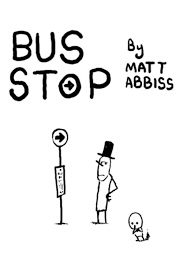
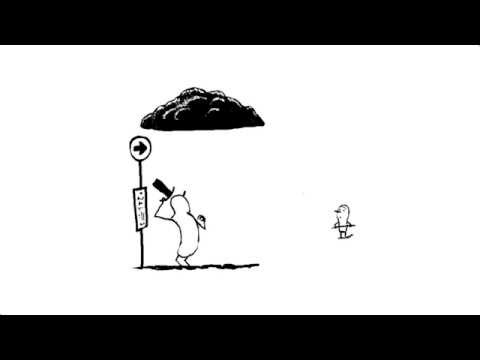
    Buss Stop, an animation by Matt Abbiss (2004) came to my attention whilst battling the animated Pull sequence. I like it a lot.

    Buss Stop. Still from animation, by Matt Abbis (2004)

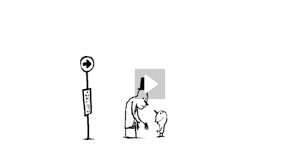
    Buss Stop (2004), an animation by Matt Abbiss, https://www.youtube.com/watch?v=dX0-DtcZjSg

    Abbiss’s 2D style is made up of simple black outlines (as are my own). However, his characters, though they are as minimal as they come, are 3D. A fundamental understanding of the human form and how it moves, alongside his impeccable comic timing and beautifully observed character interaction – Matt Abbiss’s Buss Stop characters also have necks. Indicated by the simplest of T-junctions, being able to locate the head as either left or right of the torso, enables the drawings to come to life with an agility of subtle (the grown up) and exaggerated (the child)pose. By implying a neck, we have shoulders. With shoulders we have perspective, the ability to show a shift of weight, and a wide range of head to torso movements.

    Still from Buss Stop. Matt Abbiss. (2004)

    Animation is about gesture and clarity. Being able to communicated that gesture in a few lines is so appealing as a budding animator. Using all the core aspects of the 3D form I see as fundamental, however trivial they might sound at first.

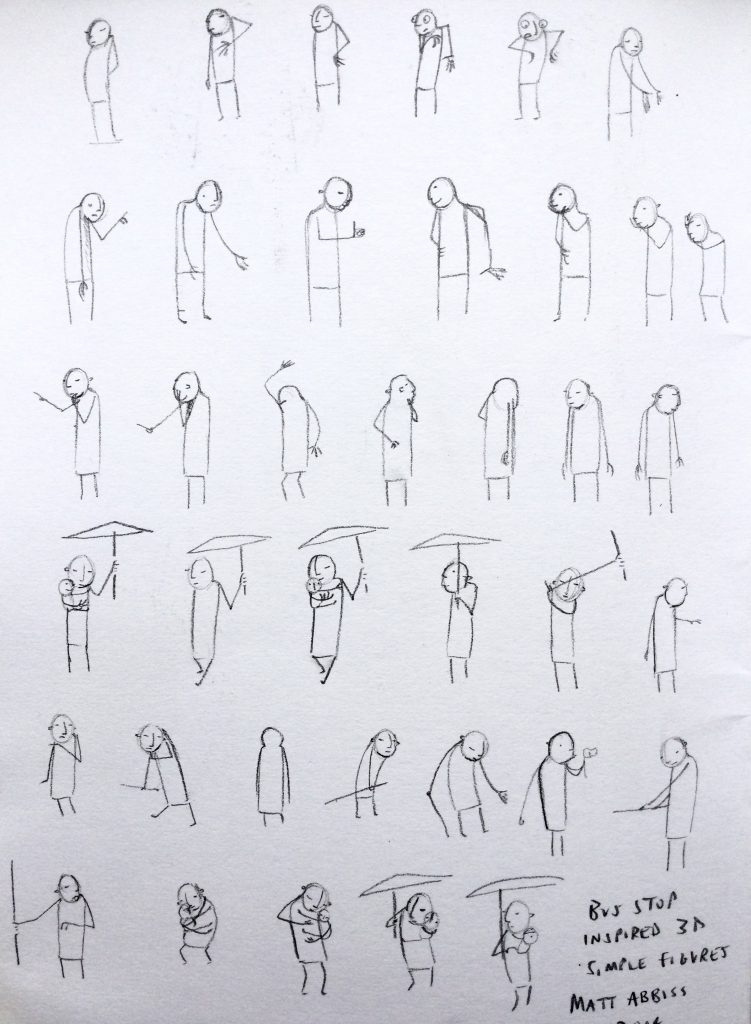
    With this in mind, I set to studying Buss Stop frame-by-frame and translated Abbiss’s character poses into my drawing style. Instantly my new character has a versatility – movement possibilities which read clearly as a 3D, 2D drawing. With the neck comes a shoulder, and with a shoulder comes a range of movements which read logically and with clarity, ie the drawing makes more sense to the viewer.

    Buss Stop inspired character study (2025) Harvey-Lewis, I

    This is exciting. The shifting of my drawing work into animatic will require many adaptations. My task is to maintain a continuity of style which resonates with truth to my drawn aesthetic. Above all I need to enjoy it. Enjoying the transition from illustration to animation and its challenges. It’s all positive growth and building an ever broadening frame of reference.

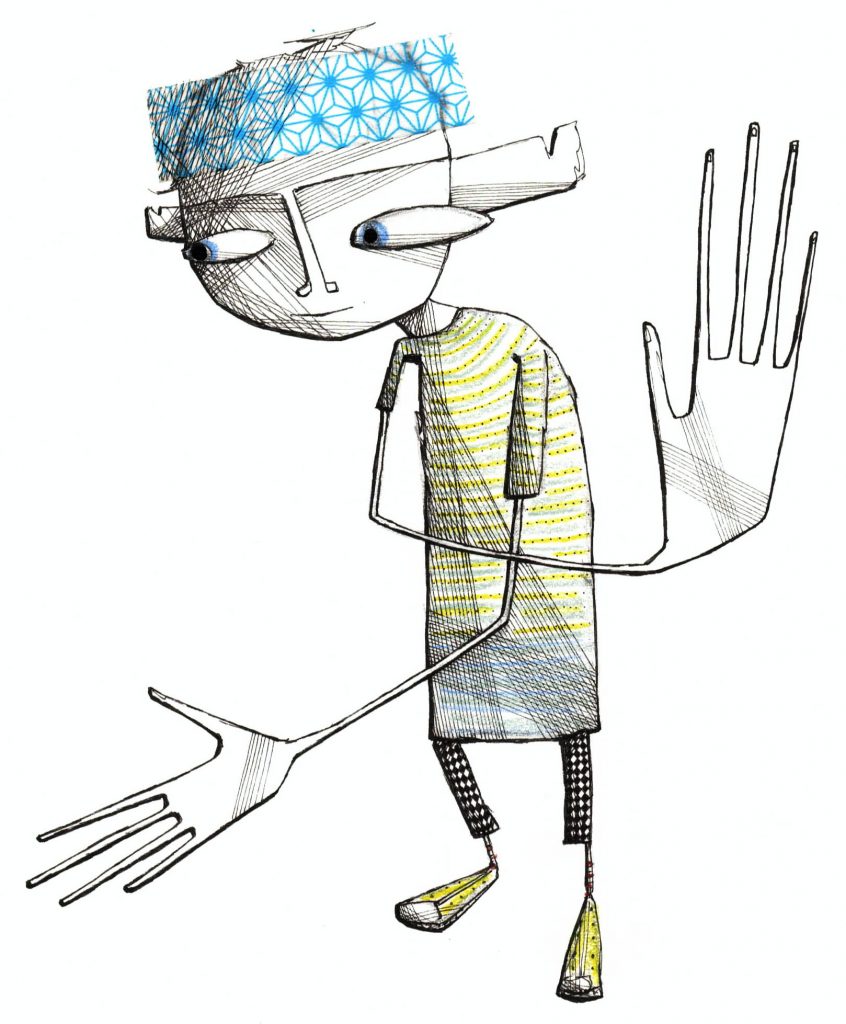
    Tape Head. Character drawing.(2026) Harvey-Lewis, I

    Look! A neck!