Industry Insights Unit 2
Talking to animator Erica Russell about her recent animated coproduction COME (2025)
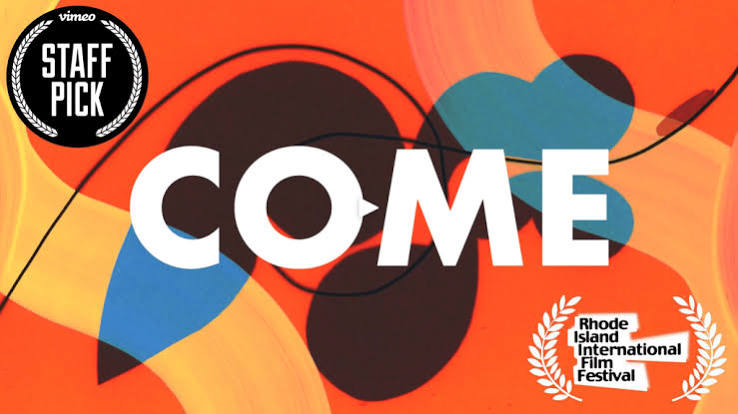
Using animation within documentary is a bit of an experiment.
Counter to the pedagogical nature of a documentary, a filmic exploration and fact sharing conversation into and around a subject of choice, the emotive use of animation (distinct from infographics) can add a dimension of understanding on a deeper level. In its distance from reality, animation can reach out emotionally, inviting creative thinking and subliminal connection.
Done well, it is less an addition, more an integration and facilitation. Animation is boundless in its ability to show or depict anything anyhow. It can shine a light into topics which are otherwise intangible, conceptual or sensation rather than object based. To me this seems like a perfect marriage. A balance of documented fact and conjecture with a visualisation of ideas and emotions.
Within a documentary, imaginative animation can take abstract and make it real.
In this blog post I wish to explore and align the professional use of animation within the film COME (2025) a documentary about the female orgasm, directed by Bronwen Parker-Rhodes and animated by Erica Russell, with my own experience in creating the art documentary Making Umwelt (2026).
I met up with Erica for a chat.
Erica Russell is an award-winning animator living in North London. She is most famous for her abstract animations Triangle (1994) and Feet of Song (1988). Working in stop motion on paper with paint, Erica is less a traditionalist more a hybrid. Her style is unique, expressive, painterly and exquisite. Her passion is movement, flow and the human form.

Working on COME, therefore, was the perfect match. Not a subject that can be illustrated in a traditional form, Erica’s animations are made to conjure a visual sense of what it feels like to experience an orgasm – feelings, emotions, sensation and touch. They are suggestive, abstract and fluid. Images to facilitate our understanding of the interviewee’s words. Effective but nonprescriptive.
The creative dialogue between Bronwen Parker-Rhodes and Erica was a series of exchanges. Erica’s process is old school and non-digital, scanning individual painting for each sequence. With these, BPR would create a line-test and a conversation of brainstorming, refinements and reviews ensued. Erica explained
“Hand drawn animation has all sorts of accidental and irregularities like real body motion which digital animation lacks”
“We wanted to create a fluid interpretation and not a literal illustration of the words” Russell
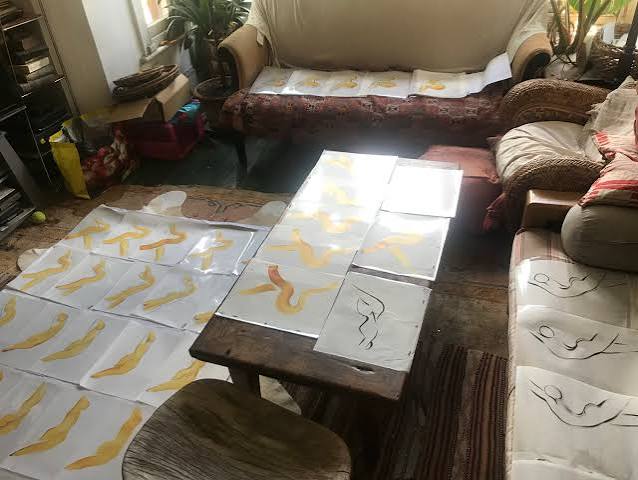
Loops of movement allowed a rhythmic freedom within the work to expand and contrast to fit the required edit. The flow was essential in both the animated and the narrative film. As Erica explains “lots of roughs were reworked or eliminated. It had to feel right”. Russell/MacKinnon
This intuition is what interests me the most.
The creative process in making an animated documentary is a fine balancing act of storytelling. Used well, as in COME, the moving graphics can illuminate and inspire a plethora of possibilities. A gateway to multifaceted comprehensions. The power of suggestion possible in animation, taking abstracted form and refining its appearance is an invitation to feel. Non lineal. Non prescriptive. As an animator, I love this balancing act.
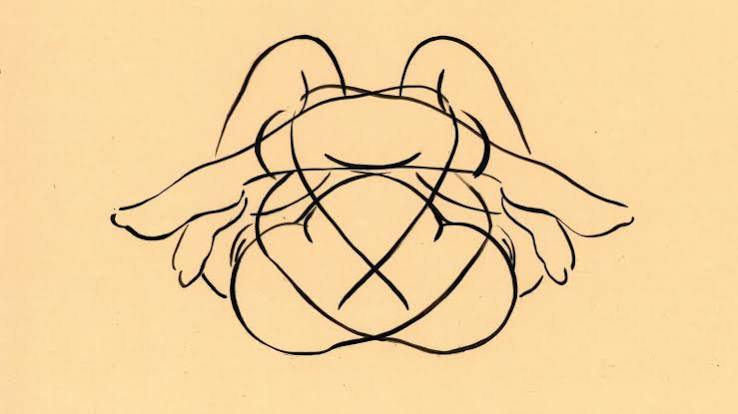
“Animation has the potential to be much more than just illustration”. Erica Russell
My connective touchstone with talking to Erica is Honesty. Bronwen Parker-Rhodes and Erica decided on a binary film of wide angled interviews and animation. Simple. No distractive camera moves, cut-aways or the nailing to a specific time or place, this film was bare bones and in my opinion all the better for it.
The real challenge Erica told me, was in the edit.
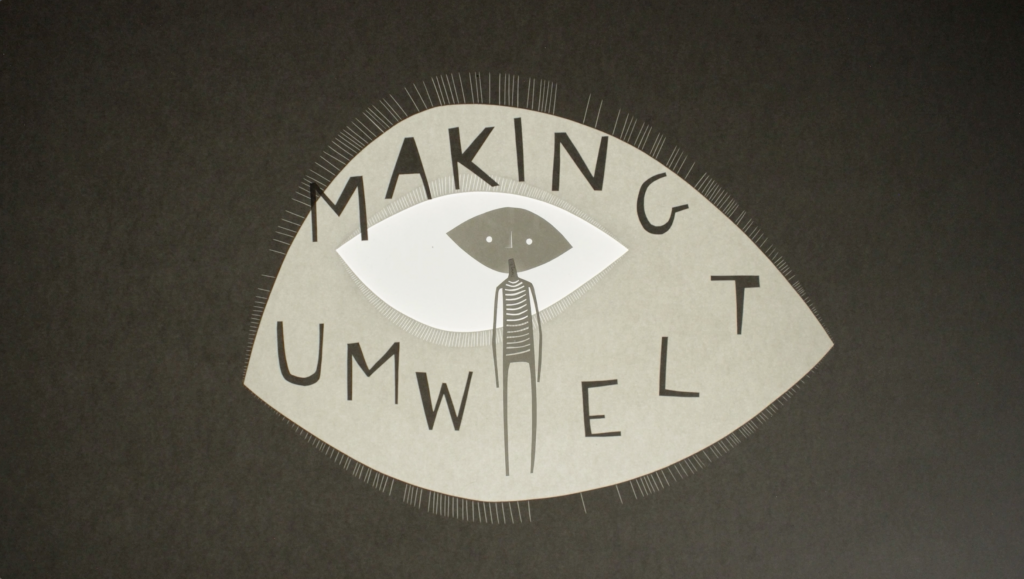
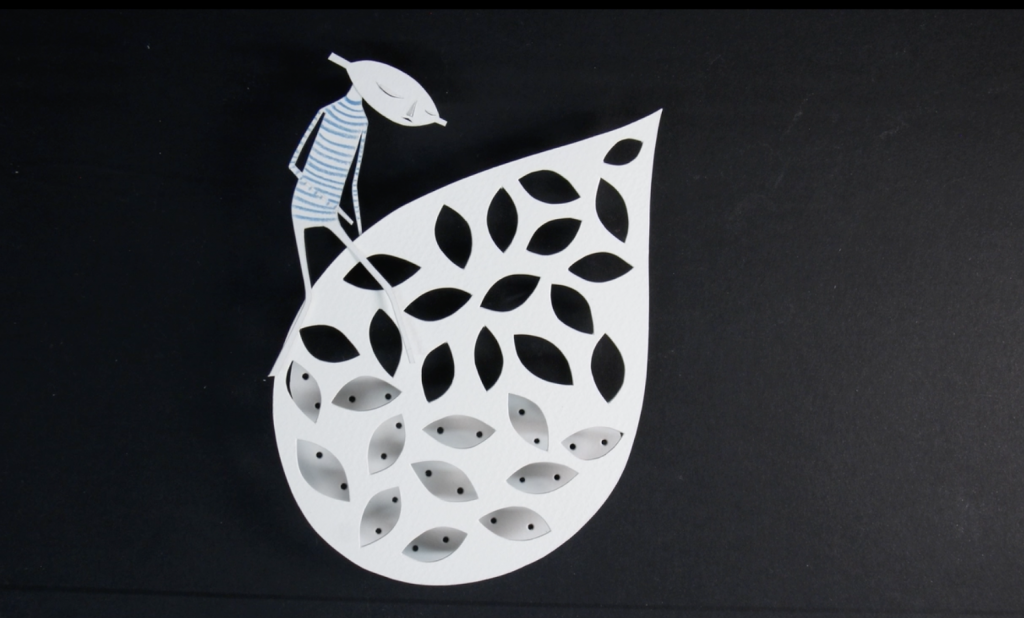
My solo experience in making Making Umwelt, as both director and animator has been creative from start to finish. The film plots my ideas, motivations and techniques behind a short-animated film Umwelt commissioned for LIAF 2026. Animated content enabled me to present concepts, keeping the aesthetic aligned and cohesive.
A documentary contains a range of information but is fundamentally a creative piece itself. It would be easy to be distracted down a series of illustrative rabbit holes and end up with a confusion of disparate soundbites. To attain a clarity in visual language requires an honesty, and that means speaking your own visual language, consistently. With each clip the question “What am I trying to say?”
For me too, the surprising creativity came in the edit. As Erica explained “turning the edit into a very intricate jigsaw puzzle”, the process is almost sculptural but one where infinite variation each tell a slightly different story.
Holding the threads of intuition and a detailed game plan posed a tantalising challenge.
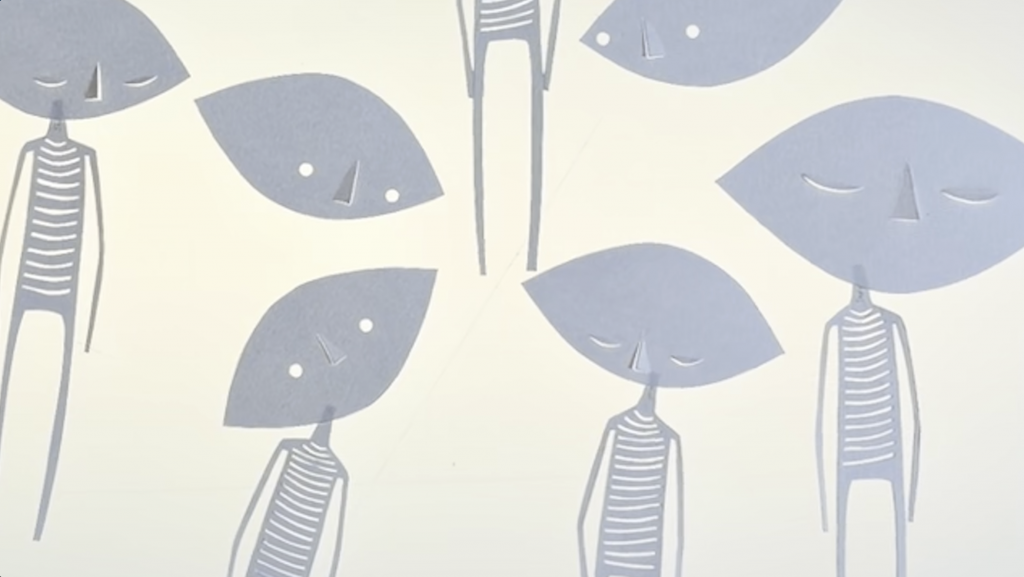
Using Adobe Premier Pro, the editing process requires method, oversight and attention to detail. Creating great content is essential, but shaping it, directing it, layering up a montage of clips and keeping to a timescale was a whole other level. Keeping all variables alive and ready was addictive. As with COME, many of the animated elements in MU where conceived as immotive space holders, to intrigue and to illuminate the spoken word.
Erica works from her Highgate studio. Her space is eclectic and arty. She works primarily with paint on paper and cells. Her custom rostrum is enormous and her coffee is good.
We talk about animation, art, painting and film. We talk about how the world of commercial animation is changing and the insidious gloaming of AI.
I learned that to be successful in animated documentary you must follow your head and your heart. Learn your craft and optimise your dexterity to the best of your ability. Enjoying the edit and leave time for this. Respect yourself and your work, be clear on your intent and above all be honest.
References
E.Russell and B Parker-Rhodes, 2025, ‘COME’, film https://www.youtube.com/watch?v=Xp0wRYCWhFU
E.Russell, 1988, Feet of Song, film
E.Russell, 1994, Triangle, film
S.Smith, 2025, How Do You Animate an Orgasm? Director’s Notes web interview, https://directorsnotes.com/2025/09/01/bronwen-parker-rhodes-come/
C.MacKinnon, 2025, Come:An Interview with Bronwen Parker-Rhodes and Erica Russell, Exploring Animated Documentary, website https://animateddocs.com/2025/09/06/come-an-interview-with-bronwen-parker-rhodes-erica-russell/
Leave a Reply